Verdant
DiscussFrom the Sovereign Realms Encyclopedia
The Verdant (the Verdant holds) are the forest peoples of the warm isles and lakes: halls of jungle wood, cocoa and dyes, and old rites. They speak Mandarin (see Tongues), and are the smallest of the five peoples, with sixteen of the world's towns. Both of their great realms are pious.
Homeland
| Land | What it is |
|---|---|
| The Lake Country | The shores of the Great Lake, where the river leaves it over its falls: lake trade routes and harbours. |
| The Verdance | Forest and wet highlands, with old crown towns of standing stones and churches cut down into rock. |
| The Fortunate Isles | Warm wooded isles with free ports, such as Madera, and the hamlet of Tenerra under the great peak. |
See Regions of the World for all the world's lands.
Realms
- Lakemere is pious. Its seat, Lakemere, is the lake-king's hall on an island in the Great Lake. It holds seven towns, among them Nyanza, where the Nahr leaves the lake over its falls, the lake harbours Kagera and Mwanz, and the fishing hamlet of Kisum.
- Elmhollow is pious. Its seat, Elmhollow, is the castle-city above the lake where the Abbai begins, with its shrine. Its seven towns include Aksum, the old crown town of standing stones, Lalibel, whose churches are cut down into the rock, Adulis and Harar.
Madera and Tenerra belong to no great realm. The Verdant's realms lean most often to the pious, then to the mercantile or the martial, and rarely to the expansionist.
Buildings
The Verdant build in two ways, both with their own landscape.
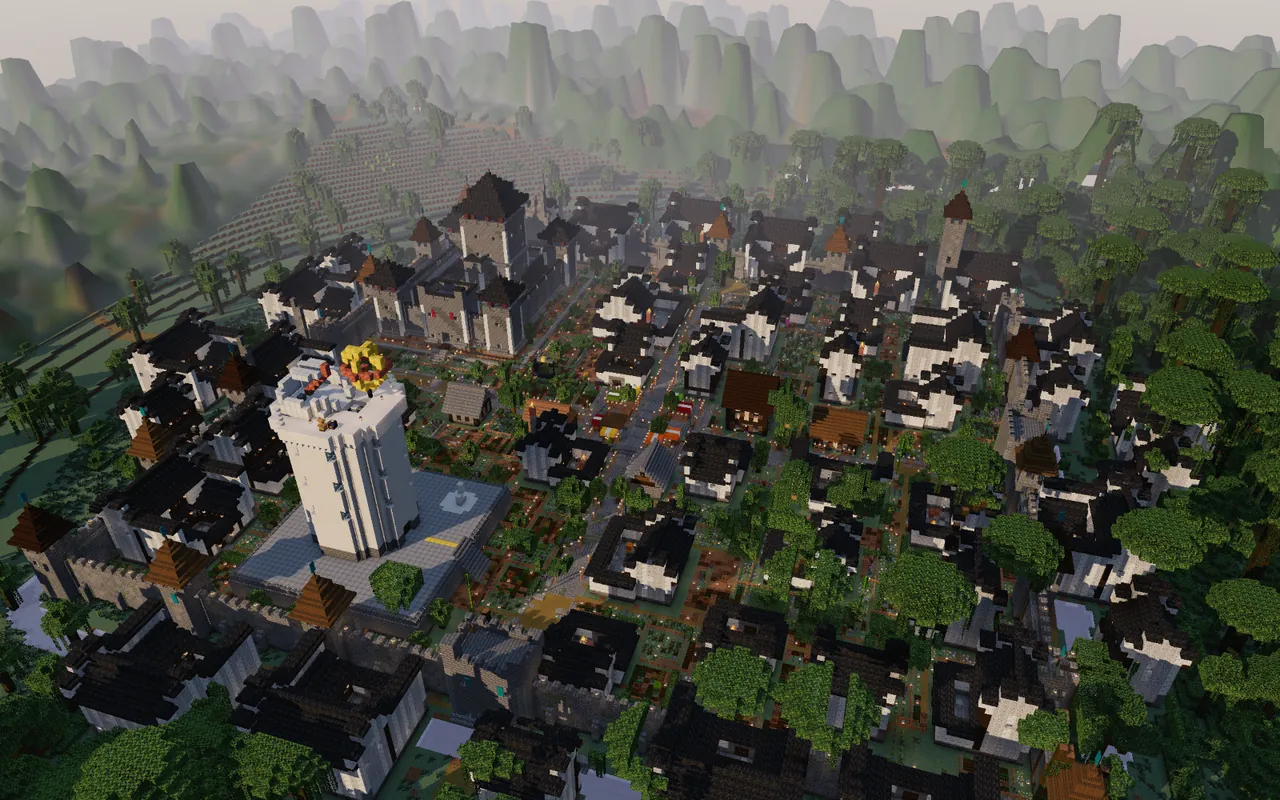
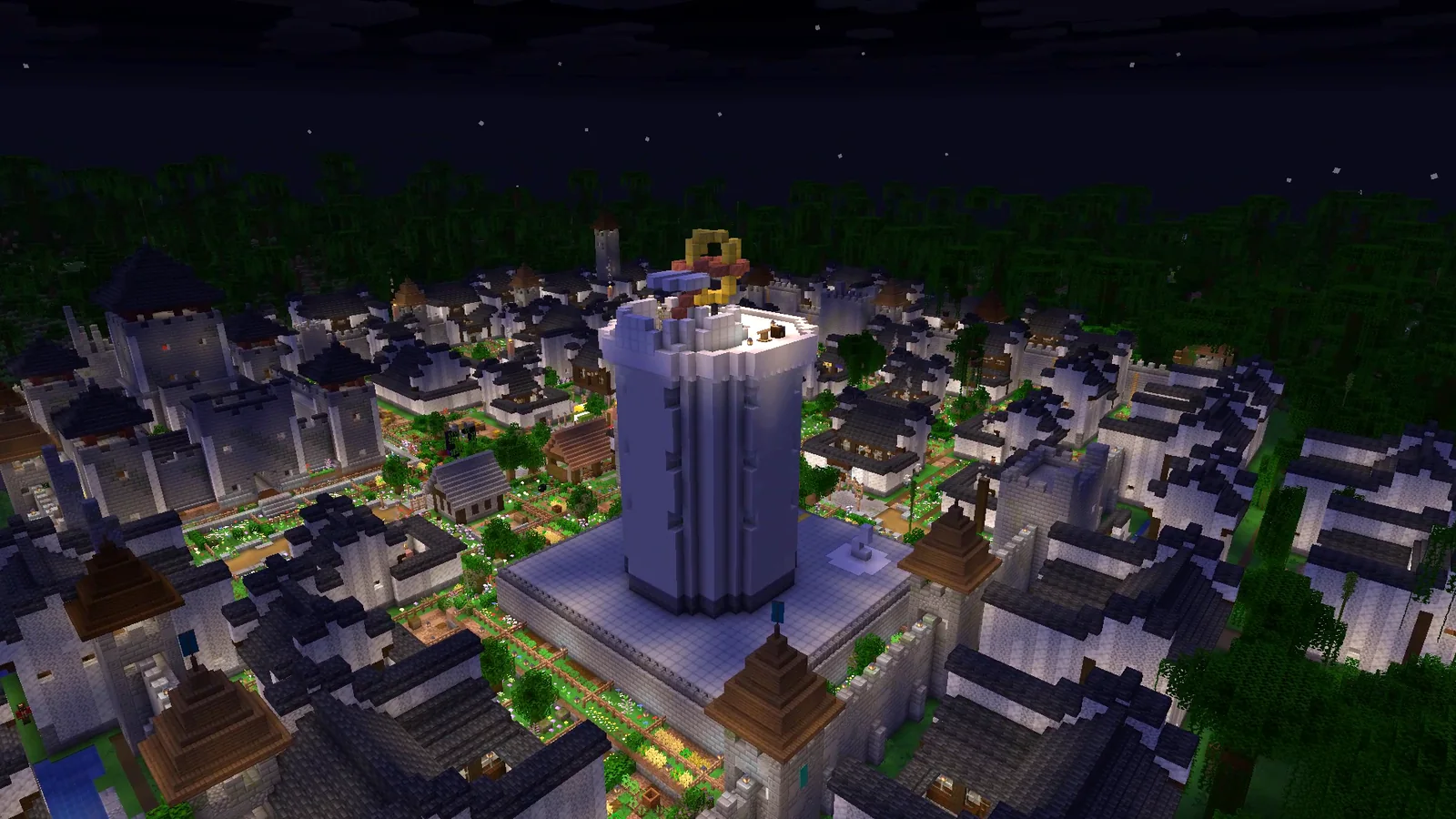
- The Rivercourt, the way of Lakemere and the lake: whitewashed walls over grey stone, dark timber within, charcoal tile roofs between stepped gables, about small light courts.
- The stilt hall, the way of the forest and the wet highlands: halls of jungle planks and logs, thatched with leaves under deep eaves.
A town founded in one way keeps it. See Buildings.
Names
Verdant names are Mandarin: Wei, Hao, Jun and Ming for men, Mei, Lan, Xiu and Ying for women, and family names Wang, Li, Zhang and Liu. On a person's Life page the name also appears in its own script. New towns are named from two parts (Longshan, Qingshan).
Law and custom
| Matter | Verdant custom |
|---|---|
| Who decides | A council of notables. |
| Severity | Lenient with people. |
| Justice | Restitution: lesser wrongs are made good rather than punished. The offender pays twice the worth of what they took or spoiled, and is not jailed for it. Only violence goes to the cells. |
| Vandalism | A grave crime: the works of the holds and their rites are guarded sternly. |
| Game law | The crown's forest (see Hunting and Game Laws): the game of the realm's land is the crown's; everyone but the crown needs a licence from a town's clerk, and poaching is fined harder. |
| Inheritance | Seniority: the eldest grown member of the house inherits. Coin and goods are shared equally; a widow or widower takes half. See Dynasties and Succession. |
Faith
The Verdant keep the oldest rites. Their old faith is the Grove, a priesthood whose tenets are peace, the ancestors and pilgrimage (see Religion). Its temples are the Grove Stone, the Grove Temple and The Green Sanctum; Verdant sanctums are the Blackroot Stone, the Temple of the Hollow and the Bleeding Tree. A long road has a grove stone at its middle. See Faith and Temples.
Known for
A new Verdant town has cocoa beans and lime dye put by.
Mantle
The Verdant Mantle,  , is a cloak of red wool with a gold clasp (see Mantles). Verdant realms fly green, leaf green, deep green and gold.
Notable towns
- Lakemere: the capital, on its island in the Great Lake.
- Elmhollow: the castle-city and shrine.
- Aksum and Lalibel: the old crown town and the rock-cut churches.
See Notable Towns.