Stealth and Thievery
DiscussFrom the Sovereign Realms Encyclopedia
Stealth and thievery is how a player takes what the law forbids without being seen to take it. The law charges a crime only when someone sees it (see Crime and Punishment), so everything a thief does is about the gap between doing a thing and being seen doing it. The Companion answers how sneaking, locks, pockets and noise go if you ask it with ? in chat, and its Law chapter has the short of it.
The first time you creep with someone about, the game says what its marks mean in one line of chat: Eye: who has noticed you. Marked ground: you'd be seen. Rest the pointer on the line (with the chat open) for the whole of it: the eye's colours, the marked ground, and how to reach for a belt or read a lock. Clicking the line opens the Companion's Law chapter. The first time your footsteps are heard and shown, a second line follows: Your steps carry as far as the ring. Creeping is silent. Each is told you once in a world, and stays told when the server restarts.
Creeping and being seen
Crouch to creep. Each of the realm's people has an awareness of you that fills while they can see you, and drains while they cannot. It fills faster in light, close up, against someone standing still, and for the watch. When it is high enough they notice you and turn to look; when it is full you are seen, and what you take now is charged.
- Townsfolk see what is before them. The watch keep a wider eye, but not behind them. A sentry on a tower sees all about.
- Within arm's length you are seen at once from the front, and sensed in a few seconds from behind.
- Someone busy at a task (at work, at a stall, talking, drinking, at prayer) is slower to notice you.
- Light and dark. Dark helps you; a lit street does not. Creeping also makes you harder to make out.
"Who's there?"
Someone who notices you while you are creeping asks who is there aloud ("Who's there?", or from the watch "Who goes there?" and the like). Once anyone has asked it of you, no one else asks it for half a minute, so a crowd that notices you asks once, not each of them in turn. Someone walking upright, by day or in the dark, is about their business: those who notice them turn to look but do not call out, and footsteps heard bring no question unless you are creeping. A noise of your own making (a break-in, a scrape at a lock, a pebble that strikes someone) can still bring the question.
The eye over your crosshair
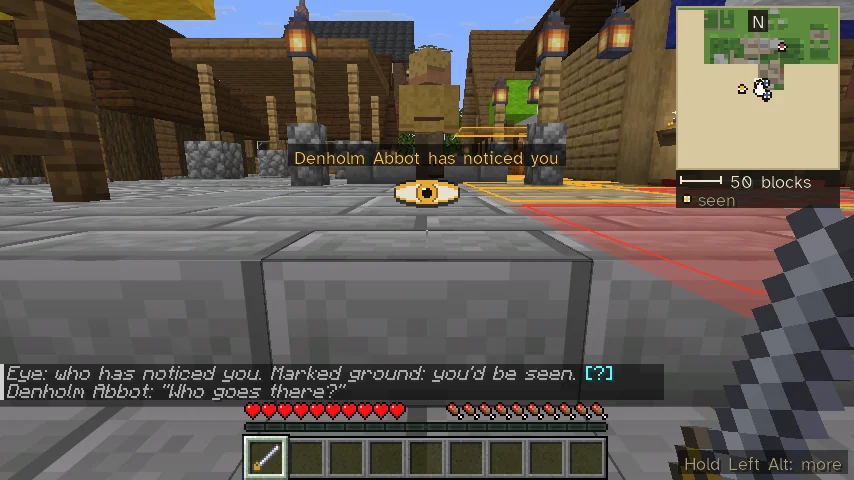
While you creep with anyone about, an eye appears over your crosshair showing how much the most watchful of them has made of you.
| The eye | Meaning |
|---|---|
| Shut or grey | Nobody has noticed you. |
| Amber and opening | Someone has noticed you and will look your way. |
| Red | You are seen, and what you take now is charged. |
Above the eye (or below it, where something else on the screen stands above) is named who has made you out ("Letitia Hayward and one other have noticed you"), and each of them is marked over their head. Holding Left Alt, the key that reads the screen's edges in full, says what the eye's colours mean. The eye is not shown while play is stopped, as when you are down or being arrested. While you creep, the ground about you is tinted where someone you know of would see you: amber for townsfolk, red for the watch. Someone round a corner that you have not seen is not shown, and can still catch you. A town's golem at its post sees as the watch does, and its word is the watch's: while one has you in sight, the eye is red.
Picking a lock
Locks guard the realm's treasuries, armouries and jails, and the houses and chests of its people. Look at a lock while crouched to learn its kind. Then, crouched with a  Lockpick in hand, use the locked door or chest.
| Lock | Pins |
|---|---|
| A latch | 2 |
| An iron lock | 3 or 4 |
| A fine lock | 5 (a pin drops back if you set them in a rush) |
| A masterwork lock | 6, quick, and a pin drops back if you rush (treasuries, armouries and jails) |
A small panel opens. Each pin bobs on its spring: tap (space or click) as the pin you are working tops its bounce, in the gold band. A tap outside the band scrapes: someone near may hear it, it costs tension, and it wears the pick. If the tension runs out or the pick wears through, the pick slips. Press Esc to back off quietly.
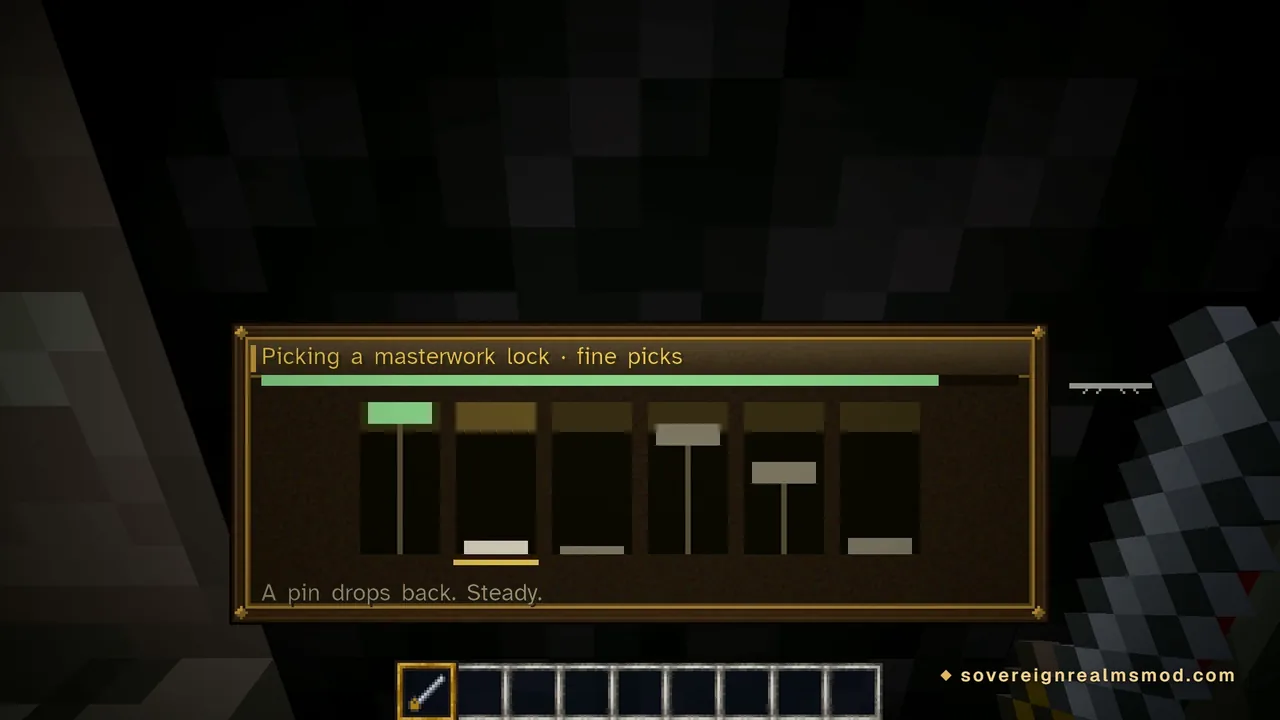
The lock that gives is open to you, and to any friend with you, for a few moments. Going in is burglary, and what you do inside is seen or not like anything else. A night-locked workshop or store is a lock too.
 Fine Lockpicks widen the band and steady the tension.
 A Skeleton Key opens any lock short of a masterwork at once, and is used up.
- If your game cannot play the picking panel (for example a vanilla client), a pick works by a roll that is steadier crouched and in the dark.
Forcing a lock
A lock can also be broken by force: keep striking the locked door or chest while you look at it. With an iron tool that suits it (an axe for a chest) it takes 45 seconds, longer with a poorer tool; by hand, or with a sword, which is no better, about four and a half minutes (the server's defaults). A line over the hotbar says how long is left. The blows carry across the street and bring the hue and cry to look, and forcing a store where someone sees you is burglary. A pick stays the quiet way.
A chest or barrel forced this way comes away whole, as one item: still locked and never opened, its goods inside and marked stolen, and a search of you finds them. Set down, it is locked again until it is picked or its keeper opens it. See Lockpicks.
Locking your own things: fit locks to the chests of a house, shop or room of yours with an iron ingot each, and a locked chest opens only for you (a stranger may still pick it, or force it with time and noise). Its sheet also offers Hire a watchman (7 crowns a week)…, one of the town's idle who sleeps by day and keeps the door by night. Thieves never try a player's place while its owner is off the server; they eye it first, and you are told ("Thieves have been eyeing your house in ..."), and a watchman turns most of them away. When the nights after pass with no try, you are told "Thieves have stopped eyeing" it, with why on the line's hover (such as "Your watchman kept them off." or "No night suited them."). A homestead out in the country can be kept the same way; see Outlaws and Raiders.
Picking a pocket
Creep up behind someone (or on them asleep) and use them, with whatever is in your hand but a lens, a seal, a horn, a lead or a name tag. From in front, an empty hand opens their sheet as it would anyone's. Players' pockets are never picked.
A small panel shows what is in reach: a purse (a commoner's light purse, a merchant's, a great one's fat one, never more than they carry), a bite of food, a great one's signet ring (see Signet Ring). Working folk carry a purse of their wages; children carry none. Creeping near someone, you are told what hangs at their belt.
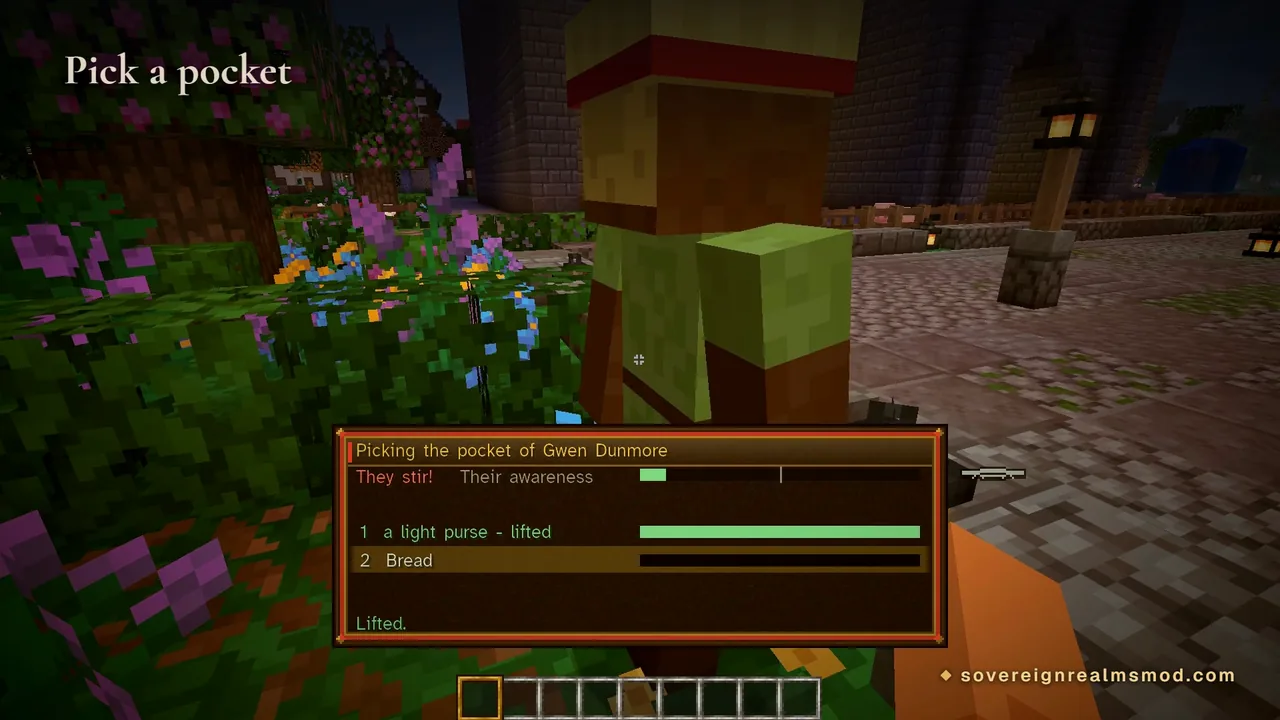
- Hold space (or tap it once to start and again to stop) to draw the chosen thing out a little at a time.
- Let go when they shift. Most stirs are warned of a moment before; some come suddenly. A hand still at their belt as they stir is felt, the thing slips back and they grow wary.
- Lingering makes them warier. The panel names anyone else who has made you out: back off if someone sees.
Made out, they cry thief and you are charged. Lifted unseen, it is yours, marked stolen, and only those who saw you can charge it. The watch stir often and warn little, and a commoner's purse is the easy one. One hand at a belt at a time.
Noise
Noise carries, and a watcher who hears you grows wary and turns to the sound. Hearing alone never makes you out.
| Noise | Carries |
|---|---|
| Sprinting | 12 blocks |
| Walking on gravel or a wooden floor | 6 blocks |
| Landing from a height | 10 blocks |
| Creeping | None |
 Soft Boots halve the rest. Quiet noises (a step, a lock's scrape, a pebble) carry through walls far less than through air; a crash, a cry or a break-in rings through the building it is made in and wakes sleepers near it.
Pebbles (four from a gravel block) are thrown to turn heads toward where they land, for a few seconds, and the watch comes to look there. Someone looking toward a pebble's landing minds a hand at their belt half as much, so one thief can throw while another reaches. A pebble that strikes someone hurts no one, but they will look round for who threw it.
A  Dark Hood makes you harder to make out in poor light (a light level of 7 or less). See Stealth Gear.
Sound rings
A noise you make shows as a ring spreading over the ground as far as it carries; who heard it is marked blue, and who comes to look, orange. A deed's noise and a thrown pebble show as they carry. Footsteps show only when they matter: only once someone has heard them, and only while you are about a thief's work, that is within twenty seconds of creeping or of a noise of your own (a deed's, a pebble's). Walking or sprinting openly through a town, you are still heard (heads turn), but no rings are drawn.
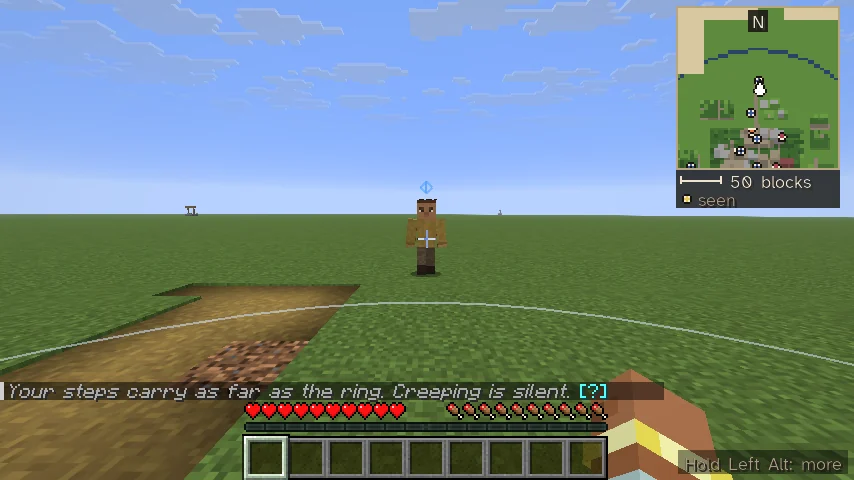
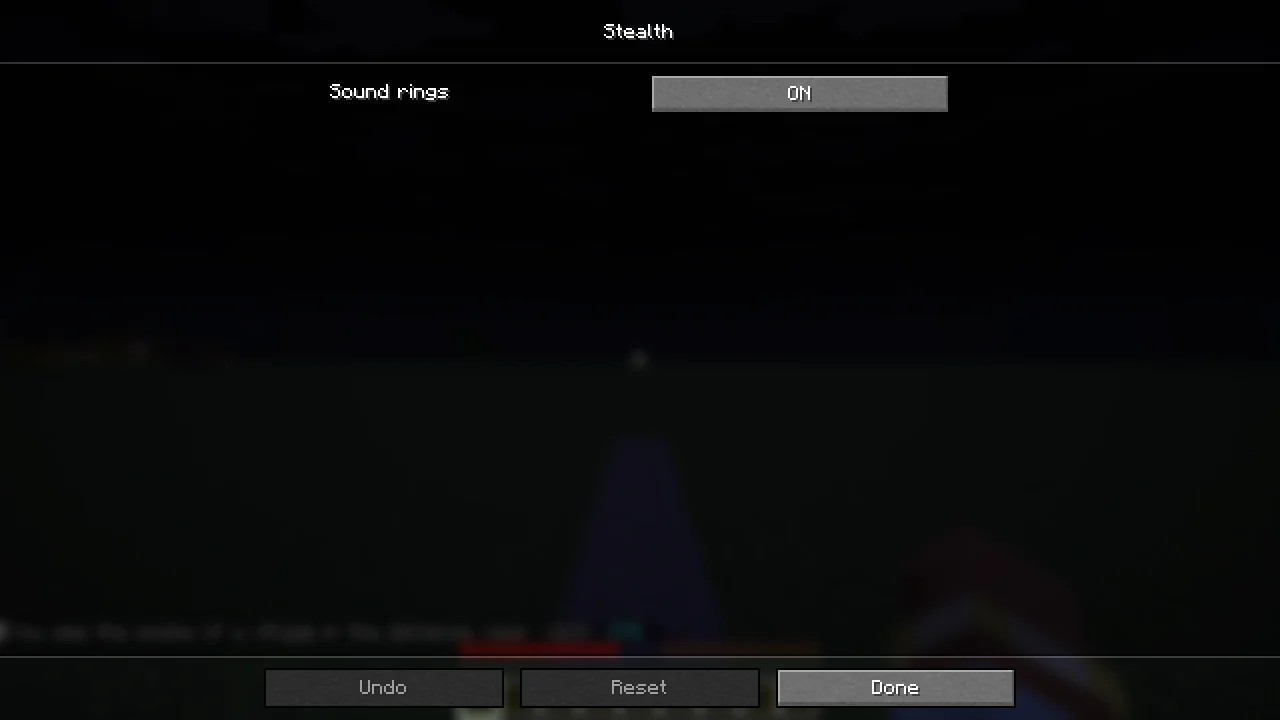
To hide every ring and mark, turn off Sound rings in the mod's options (from the game menu: Mods, Sovereign Realms, its config, then the Stealth page). The setting is kept on your own computer. In Controls, Sound rings: show or hide has no key until you give it one; pressed, it says "Sound rings: hidden." or "Sound rings: shown while you sneak." over the hotbar. See Controls and Key Bindings.
Heat: who could name you
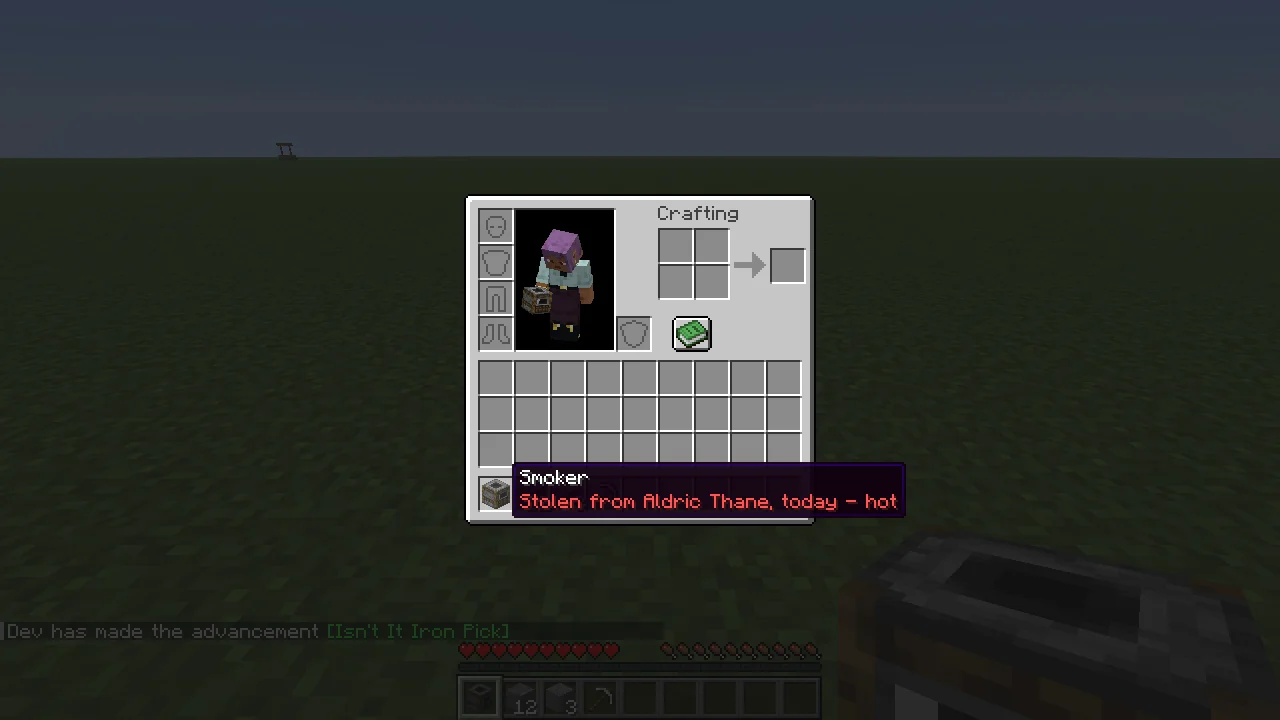
Each person who saw you at a crime is kept in mind for ten minutes of the world's clock, while you still answer to the realm for it. Your own corner map rings them in red where they stand, so you know whom to keep clear of or wait out. Nobody else's map shows them. A theft found out later reaches you as word that what you took is hot. See Maps, the Corner Map and the Compass.
Taking from houses and walls
What a town's buildings are fitted with, and built of, is not there for the taking. A bed, a smoker, a furnace or a bench mined out of a house drops marked Stolen from the holder of its deed, else the head of its household, and what it held spills out marked too. Seen, it is theft. Unseen, it is found missing when someone next goes to the building's stores or at the morning's tally, and word reaches you then that what you took is hot. The stone of a town's walls and buildings, whatever stone it is, drops marked stolen too (the walls' from the realm), and breaking it is damage. Your own house, a house you rent whole and the wild stay clean. The whole of it is in Crime and Punishment.
Heists and the dark trade
Members of a criminal organisation, and those above them, may be given a heist: a strongbox of the town behind a fine or masterwork lock. Creep where you can see the place for twenty seconds to case it, and the watch's posts and patrol paths are marked on the ground for three minutes. The organisation's inside man leaves the doors unlatched to you that night; the box's own lock is yours to pick. A lieutenant's heist comes with a lookout who whistles when the watch comes near. See The Underworld.
Selling what you steal: honest markets refuse stolen goods of their own realm or its friends and call the guard; fences and an organisation's black market deal in them.
Law and thieves' tools
Burglars' tools (lockpicks) may be declared contraband by a realm's magistrate; the watch takes them from strangers it searches. A lockpick is found in the search at the cell door most of the time when you are jailed (see Arrest and Jail).
See also
Lockpicks, Stealth Gear, Crime and Punishment, Wanted and Bounties, The Watch and Watchtowers, Townspeople.