Townspeople
DiscussFrom the Sovereign Realms Encyclopedia
Townspeople are the men, women and children who live in the towns of Sovereign Realms. Each one is somebody: named, with an age, a family, a nature, skills, a home and a bed, a job, things they carry, memories, and opinions of everyone they have dealt with. The simulation runs on them. They farm the fields, bake the bread, stand the watch, marry, raise children, quarrel, pray, grow old and die, and a realm is as prosperous or as troubled as its people make it. There are about fifty thousand of them in the world as it stands.
You meet them by walking up to them. Right-click anyone, whatever you are holding, to talk. To look at them instead, sneak with an empty hand, or hold a  Realm Lens or a
 Steward's Seal. Either way you are opening a sheet (see Sheets).

The sheet
A person of your own realm has a sheet in pages. The Now page is read at a glance:
- Two cards. The first, under a head (a sword for a soldier), is the person now: what they are doing, any problem stopping them, and the worst of what ails them on a chip (Leaving, Hurt, Starving, Hungry, Unhappy or Problem). To their own realm it also shows their food, rest and company on three meters, and its hover says where their next meals come from. The second card is their place: their work at its building (click it to open the building), and their station. Their home follows as a chip that opens it.
- Tiles: Mood, Health, Toward you (how they regard you, once they know you) and The crown (their regard for the crown), each a word or a number on a meter. Hover a tile for the number behind it and its scale.
- Feelings, as chips: green for the good and red for the bad, each with how much it moves them. The strongest three are shown, with the rest, and what they come to together, on the hover of a fourth chip. Their nature's part in their mood is a chip of its own, "By nature".
The Life page gives their nature (traits), the tongues they speak, their manner of speech, their best skills, and what came to them and went from them this week (wages, taxes, sales and household purchases). A town's stewards and magistrates, and a marshal for a soldier, also see there what they carry, and have two more pages: People (family tree, household, friends and rivals, and what each tie makes them likely to do) and Memories. Others see how they feel and what they are like, but not whom they hold dear.
Someone who is not of your realm has a sheet of one page: what they are doing, what ails them, their mood, how they regard you, and what anyone could tell by looking (their nature, their tongues and their two best skills).
Mood
Mood runs from 0 to 100: a person's feelings are added to an even 50. Each trait adds or subtracts a little by nature, and each thought adds or subtracts for a while. Thoughts with the same cause replace each other rather than stacking.
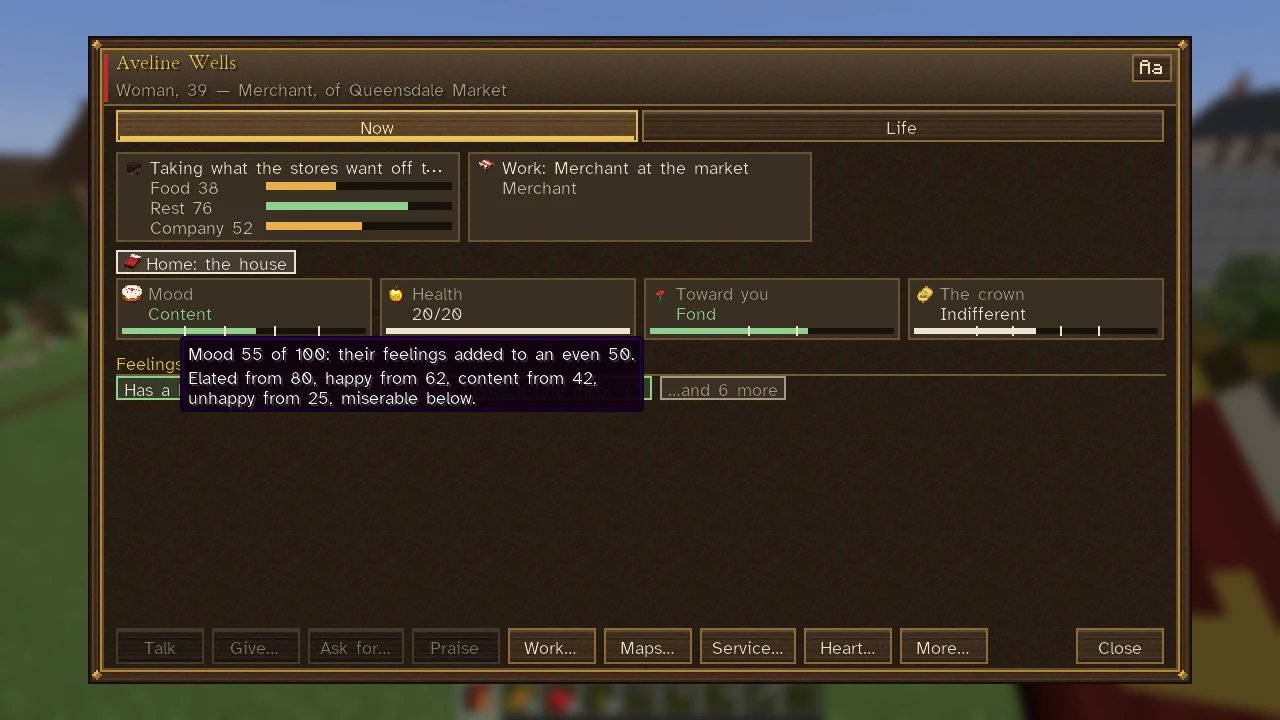
| Mood | Word |
|---|---|
| 80 and over | Elated |
| 62 and over | Happy |
| 42 and over | Content |
| 25 and over | Unhappy |
| Below 25 | Miserable |
Thoughts are things that happened: a fine meal, a good talk, a quarrel with a neighbour, praying at the shrine, a grand house, no fuel put by for the hearth, wages that went unpaid, a fever, a child on the way. Hunger, tiredness, loneliness and having no home each add their own, from "Hungry" up to "Starving". A person who cannot make themselves understood in a new town feels it too (see Tongues).
Needs
Three bars fall with time and are filled by living:
- Food. People eat real food: what they carry, then their home pantry, then rations from the granary if the realm gives them, then the market with their own coin. See Food, Granaries and Hunger. Someone with nothing to eat starves, and in time dies.
- Rest. They sleep in their own bed at night. A person without a bed sleeps rough.
- Company. They talk, visit, drink at the alehouse and pray. A sociable person needs more of it and a loner less.
When several wants compete, the order runs roughly: danger, then starving, then bedtime, hunger, work, mealtime and evening company.
Traits
Everyone has two or three traits, and a trait never comes with its opposite.
| Trait | Effect |
|---|---|
| Industrious / Lazy | Works faster / works slower and rests more |
| Glutton / Abstemious | Needs more food / needs less |
| Brave / Craven | Stands firm in danger / flees at the first threat, and cornered, cowers until struck a second time |
| Cheerful / Gloomy | Naturally in good spirits / low in spirits |
| Sociable / Loner | Loves company, gets lonely / happy alone |
| Kind | Warms to others quickly |
| Proud | Resents low wages and poor homes |
| Greedy / Generous | Wants coin, spends little / shares food and gifts |
| Hardy / Sickly | Tougher than most / frail |
| Clever | Learns skills quickly |
| Loyal / Fickle | Slow to turn against the realm / quick to leave when unhappy |
Their manner of speech follows from these: a person may be crass, sweet, flirtatious, shy, pompous, blunt, sly, jovial, dour or hot-headed, and greets you as such.
Skills
Work teaches. Each time someone does their trade they gain experience in the matching skill, and a skill is rated from 0 to 20: novice, able (from 2), skilled (from 6), expert (from 11) and master (from 16). The twenty skills are Farming, Forestry, Mining, Hauling, Cooking, Smithing, Building, Trade, Swordplay, Archery, Speech, Husbandry, Fishing, Carpentry, Masonry, Medicine, Salt-making, Seamanship, Devotion and Deep lore. Craftsmen also pick up tricks from better hands at the same trade. See Work and Professions.
Memories, ties and standing
A person remembers what happened to them (their last forty memories are kept) and holds an opinion of every person they know, from −100 to 100. A tie with a bond is named by it: spouse, parent, child, sibling, friend, rival, sweetheart, comrade, mentor, apprentice, or one who brought food in famine or one who wronged them. Without a bond, an opinion reads as acquaintance, fond, close, dislikes or despises. Everyone remembers you the same way: what you said, gave and did before them. See Renown and Following.
Adults also have a station, from a peasant (degree 0) up to an emperor (10), and a regard for the crown, from devoted to hostile, which feeds politics.
A day in a town
People wake, eat, go to work at their building, come home for meals, spend the evening in company or at the temple (see Faith and Temples) and sleep. Of an evening, and on holiday afternoons, a town with a player nearby turns out on its green for a match of Camp-ball (its club keeps each player's goals and matches, shown on the Life page of their sheet, and plays in its realm's league), and of an evening its minstrels play at the alehouse or the inn (see Music). A town's idle adults take work at buildings with free places, your quotas first and food when it runs short. Where there is trouble they flee indoors and wait for the alarm to end, and where the realm holds the land firmly they feel safe, which is itself a good thought. Friends and kin bring food to the hungry. Old enemies can come to blows, and the desperate may pilfer from market stalls; your guards treat both as crimes if anyone sees.
A player found asleep in a bed that is not theirs is woken by whoever of the town sees them there, the household first; a stranger found so at night is then told to leave the house (see Lodging).
They open doors and gates on their way and shut them behind them. A realm's own people may go anywhere in it except the jail and the treasury. Strangers, prisoners and the wanted find the rest barred, all but the market, the inn, the cookshop and the embassy.
Cornered
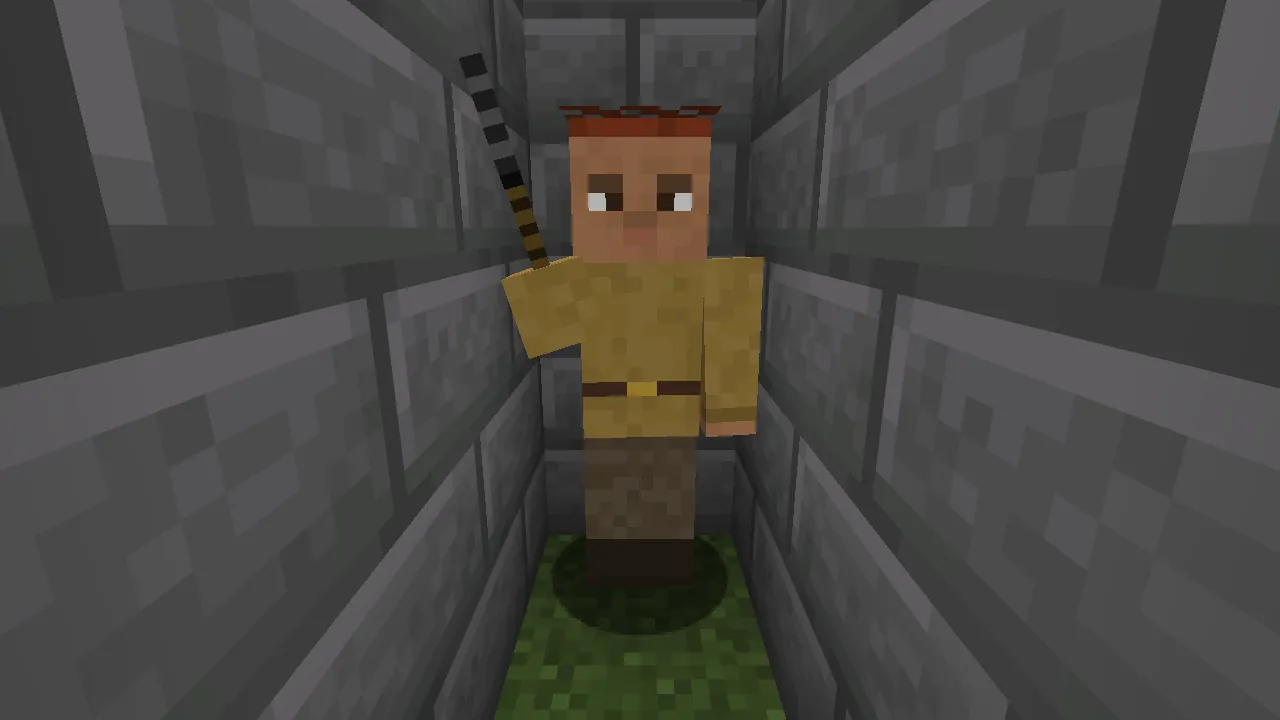
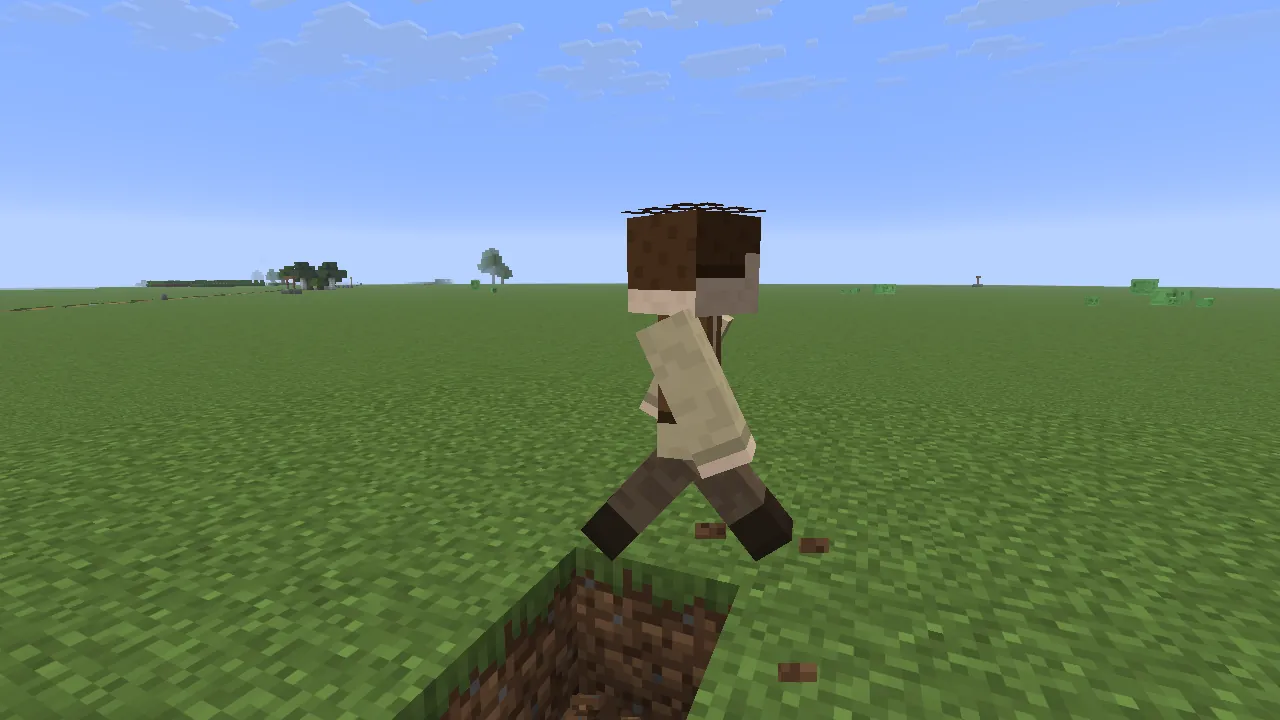
Townsfolk who run from danger can be cornered. One counts as cornered when whoever struck them in the last five seconds is within three blocks and, for two seconds, they have gained less than a block on them. Then they do one of two things:
- Dig out. Where soft ground (earth and turf, sand, gravel, clay, mud, moss, snow, the wild leaves of a tree) lies between them and open ground on a side away from their attacker, they cut a level way through it to open ground two to four blocks off; shut in a pit, they cut a stair up out of it. They cut with whatever they hold, and their sheet reads Cornered, digging out. They keep at it while the attacker stays within eight blocks, then walk out by the way they cut. They never dig a building's blocks (a field's or a yard's ground among them), land another holds, or the ground of another realm's town unless their realm is at war with it. Walled in inside a town by blocks a stranger set down there, they pull down any as soft as wood, cobblestone or brick and leave them on the ground for their owner.
- Fight back. With no way to dig, they strike back (Cornered, fighting back) with the weapon or tool in their hand, or else a weapon from their pack, or failing one an axe, pick, shovel or hoe. They keep at it until the attacker is more than four blocks off, and then run again.
Children never fight back: cornered, they crouch where they are (Cornered, cowering) and cry "Help! Help me!" every five seconds, heard by anyone within sixteen blocks. A craven adult cowers so at the first blow and fights from the second. No one cornered strikes back at a creeper, at someone the law has put a choice to, at an opponent in a sanctioned bout, or at their own realm's watch or soldiers: they cower instead. A blow struck back by one cornered is no reason for the one who cornered them to run.
Life stages
Children play with others of their age from three. From six they do a morning chore for the house and, where there is a temple and a priest, go to lessons; they are called in at dusk. From twelve they follow a parent or another master to learn a trade, and they come of age at sixteen. Elders retire at sixty-five and die in time, and the bereaved grieve. See Courtship and Marriage for how households begin.
What you can do with a person
From a person's sheet you can Talk, Give… anything in your pack, Ask for… what they carry, and Praise or Rebuke them; these stand first on the bar. The rest are gathered under buttons by what they act on. As the realm's ruler or steward you find Assign work, Dismiss and Move home under Work…, and Enlist (to make them a soldier) under Service…. Law… holds what the law can do to them, Family… a child's standing, and Heart… courtship (see Courtship and Marriage). A merchant or a scribe keeps the maps they sell under Maps… (see Maps, the Corner Map and the Compass), and a town's bard the songs you can commission under Songs…. What does not fit on the bar is under More….
They may say no. A hungry man keeps his bread, a woman who loves her home will not leave it for a worse one on your say-so, and many are no fighters and will not take up arms unless the law presses them. Those who like and trust you give way more often. Offered work they are reluctant at, they will say why and ask for a crown in hand.
Why people leave
A person who is miserable on two mornings in a row may pack up and go, household and all, and the chance rises with each further day. They go to a happier town with room; with none, to the nearest town in the world whose land and trade can feed them, which takes them in (see Food, Granaries and Hunger); only with no such town anywhere do they go off beyond the known realms. One worn down by hunger (who went hungry, found no food to be had, starved on the road or lived on relief lately) goes as the others do where there is a happier town, else to a town that will take them in and feed them, near or far, and with none anywhere makes camp by the road rather than leave the realms. Each person who leaves the world for good is written in the server's log with the reason. The idle of a town with no work for them may also go to seek it elsewhere (see Work and Professions). A household that no town will take may instead go to a homestead nearby that has a free bed for each of them and food to spare, and ask its holder for a place there (see Homesteads). Fickle people go sooner and loyal ones later; so do those with no faith in the crown. People who are starving in a town with almost nothing put by leave while they still can walk.
The People tab
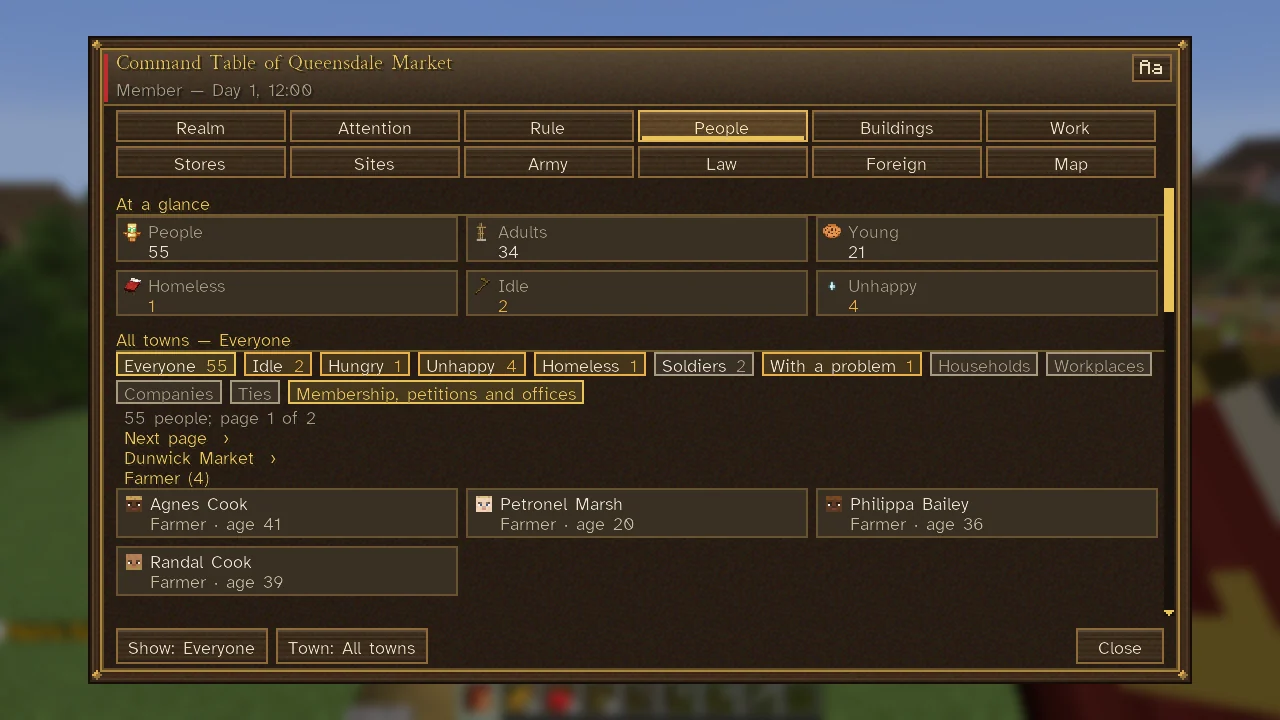
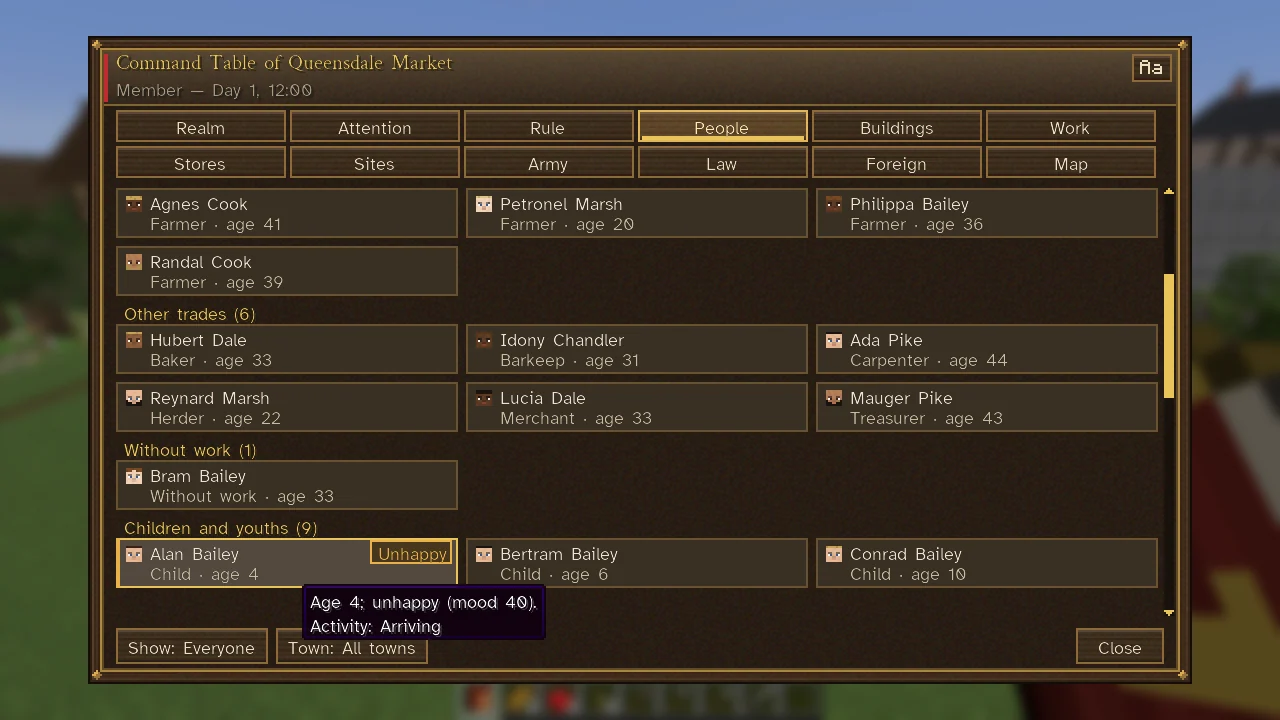
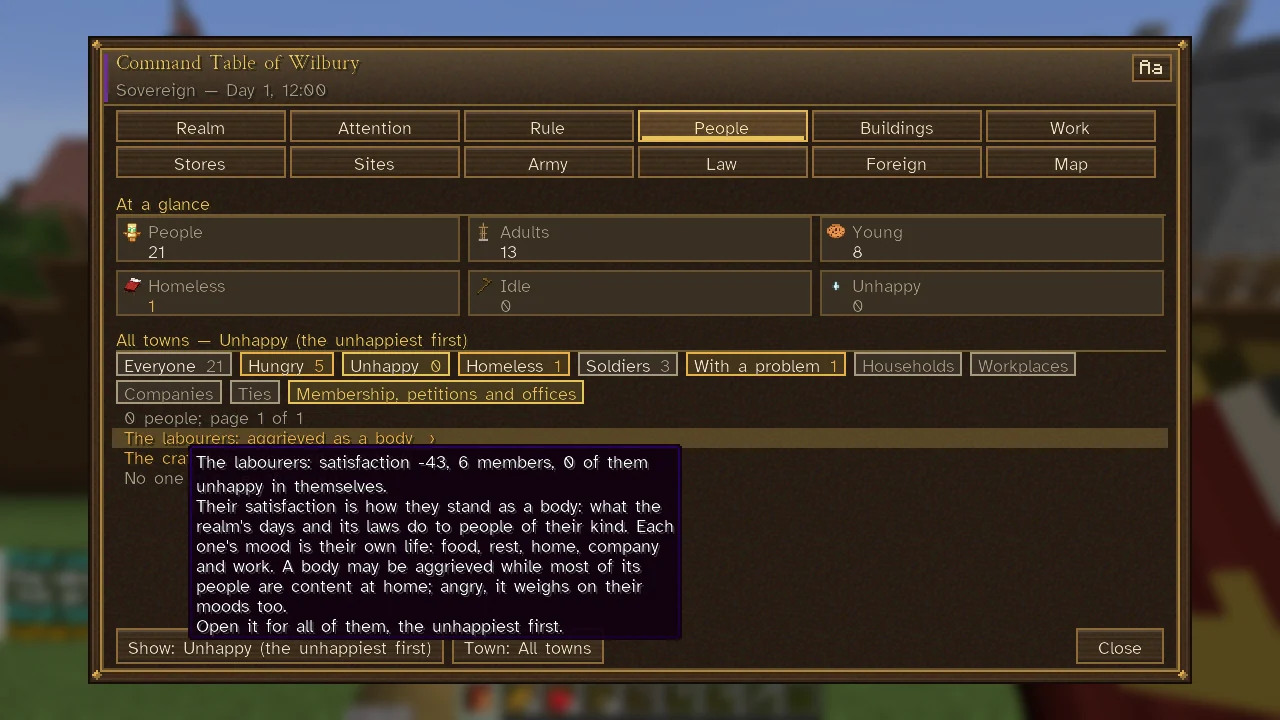
The Command Table's People tab is a census of the realm. It opens on six tiles: People, Adults, Young, Homeless, Idle and Unhappy. The last three turn amber when anyone is counted (Unhappy red when it is a third of them), and each opens its own list. With all towns shown, People and Adults also carry how they moved since the morning before, in green or red, and their hovers say that change in words with its day, then how they moved over the last mornings, up to ten. Idle counts the grown of working age who have no trade and are not in service, as the Work tab's Idle hands tile and the Attention tab's cards count them too. Under the roster's heading, its views are chips with their counts: Everyone, Idle, Hungry, Unhappy, Homeless, Leaving, Hurt or sick, Soldiers and With a problem, and Households, Workplaces, Companies and Ties, which group everyone. The view shown is in gold, a view holding someone in want is amber, and a view that holds no one is left off. In a realm of players, a last chip opens its Membership, petitions and offices. The Show: button on the bar has every view by its whole name (among them With the fever, which a fever's card on the Attention tab opens), and a view of each body of the realm (the landed, the merchants, the craftsfolk, the labourers, the clergy, the soldiery), the unhappiest first; Town: limits the list to one town, as does clicking a town's name over its people.
Each person is a card with their face, their name, their trade and age, and the worst of what ails them on a chip (Leaving, Hurt, Hungry, Unhappy or Problem), and then the card's left edge is amber, or red for the worst off. Hover a card for their mood, what they are doing and what stops them, and click it for their sheet. The cards stand under their trade: a trade with three or more in a town by name, the rest together as Other trades, then those without work, those under arms, and the children and youths. In the Households, Workplaces and Companies views they stand under their home, workplace or company instead. A page holds forty.
The Unhappy view lists the unhappiest first. For a ruler it also names the bodies of the realm (the merchants, the labourers, the craftsfolk) that are aggrieved as a body. Their satisfaction shows how the realm's laws and days treat people of their kind, and a body may be aggrieved while most of its people are content at home (see Factions and Demands).
To keep a town, fix what they hold against you: food, beds, wages, fair laws, and the trouble spots the watch ought to patrol. For wounds and fever see Hurts and Healing. When nobody is near a town it lives on in the background, a day at a time, and any days it is still owed are lived as someone comes near or heads for it; if they arrive first, its people come out to meet them and the owed days are lived on behind them (see Catch-up Simulation).