Lodging
DiscussFrom the Sovereign Realms Encyclopedia
Lodging is renting somewhere to sleep. There are three ways: a room at an inn, a spare bed in a household's house, or one of the crown's empty houses let whole. All three give you a bed to wake in if you fall, and make you one of the town's residents while the let runs. A player who has no house of their own, or who is a stranger in a town not their own, will meet lodging early: ask the Companion "where can I sleep" and it names the inn. A newcomer's first night at the inn of the town where they begin is free.
A room at an inn
An inn is a building whose marker is the Tavern Keg. It needs a keg, a bed for travellers and light, and one innkeeper works there. Travellers and new settlers arrive at the inn first, and townsfolk gather in its taproom in the evening. (The alehouse is a different place: it only pours drink; see Alehouses and Drink.)
To take a room, talk to the innkeeper and ask for one. You pay ahead. A room costs 2 crowns a night and 10 a week in a town of fewer than 30 people, and half as much again (3 and 15) in a town of 30 or more. You may take a room for a night, three nights, a week, two weeks or four weeks; the longer terms are priced by the week, and four weeks or more is a tenth cheaper. A let always ends at eight in the morning, by the sun.
| Term | Town under 30 people | Town of 30 or more |
|---|---|---|
| A night | 2 crowns | 3 crowns |
| A week | 10 crowns | 15 crowns |
Where no one keeps the house, sign the inn's ledger at its counter instead. The inn's page opens on a card of what it is for, who keeps it and whether it is open; under At the counter it says how many rooms are free and, while the keeper is in, sends you to speak with them. When the keeper is out, Rent room and Rent week, each with its price, and Rent for longer… stand there, for you to sign for yourself once you are inside the inn.
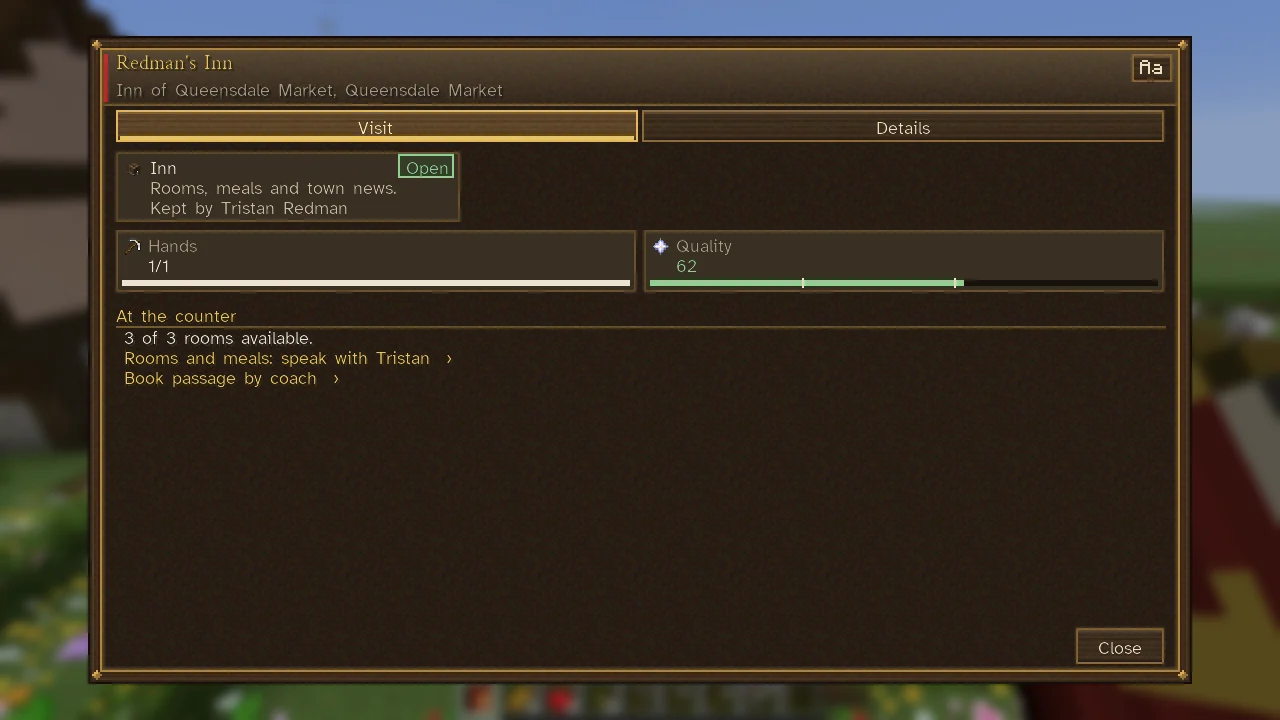
What you get:
- The bed. It is where you wake if you fall, for as long as the let runs. No one else may sleep in it.
- The chest. The chest beside the bed, if it has one, is yours alone. Anyone else who takes from it is charged with burglary.
- A stable for your horse. A horse you ride or lead is stabled as yours.
- A choice of bed. If you lie down in another free bed of the inn you rent at, that bed becomes your room for the same stay.
When the let runs out, the bed stops being your respawn, and what you left in the chest is kept for a day before it goes to the inn's stores. Giving a room up repays nothing.
Finding your room
An inn's rooms are numbered in the order a guest meets their doors: on the counter's floor counting from the counter, on the floors above from the head of the stairs. The counter's floor comes first, then each floor up, then any below. The inn's own list of rooms uses the same numbers.
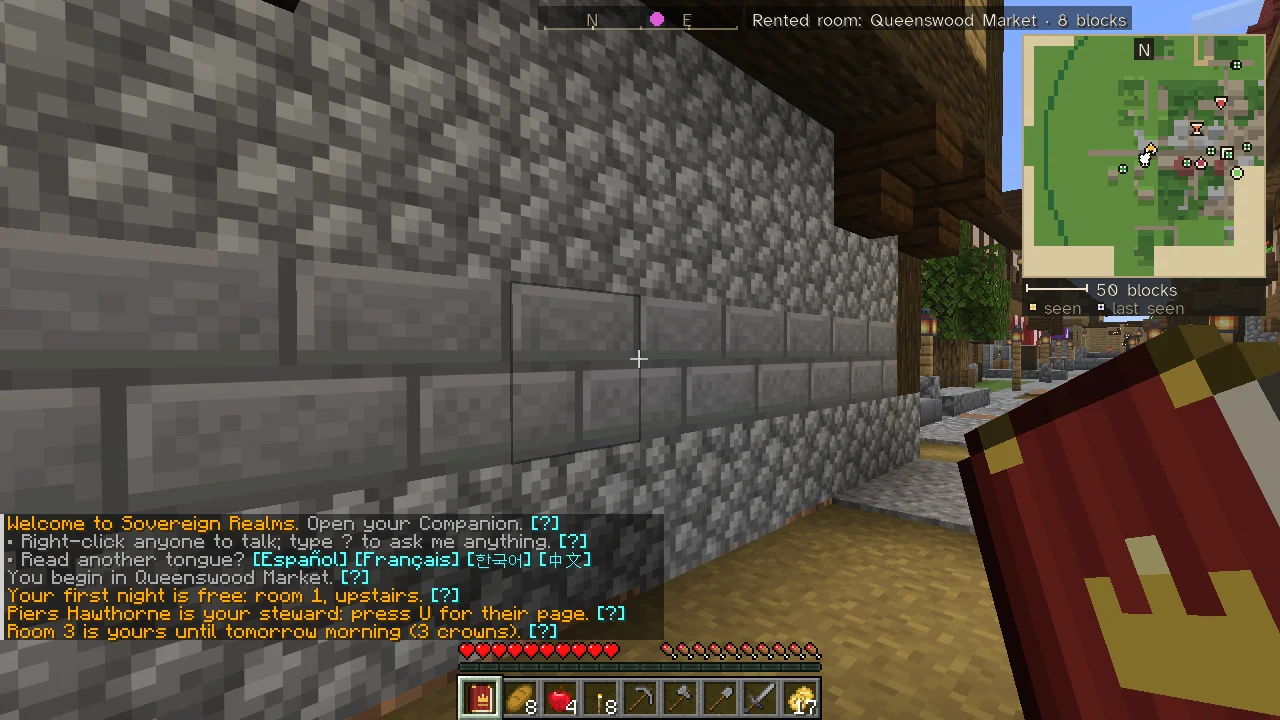
- The words. The booking is told in one line of chat, such as "Room 3 is yours until tomorrow morning (3 crowns)." Its hover holds the rest: the keeper's word, the bed and the chest, and which room it is by its floor and its door ("It is room 2, upstairs, the second door from the stairs; its door is marked for you while you stay."). The innkeeper's page and the inn's counter say it too, under "Your room is yours until ...". If you try another guest's bed you are told which is yours: "This is another guest's room. Yours is room 2, upstairs, the second door from the stairs."
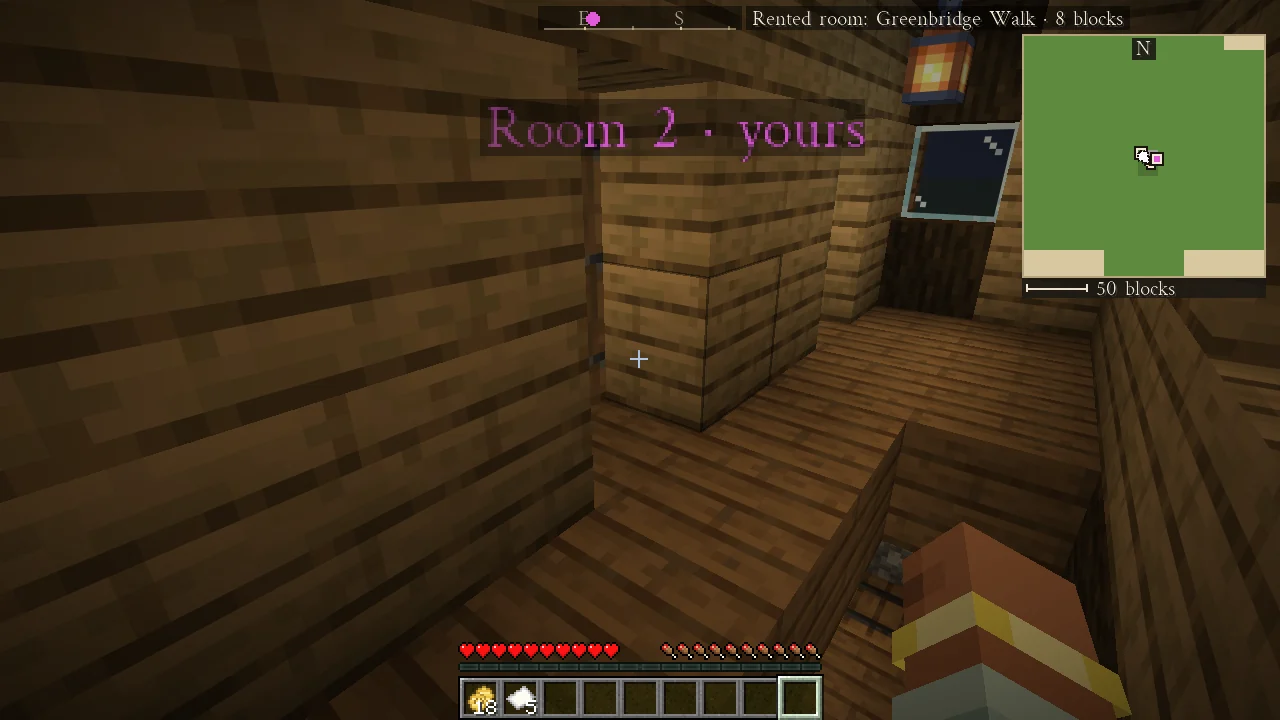
- The mark. "Room 2 · yours" floats just out from your room's door, at the height of its upper half, in the map pin's colour. Only you see it. It shows faintly through the inn's walls and floors as you come near, so you can find the door from the taproom or the stairs, and whole where nothing stands between. It stays for as long as the let runs and goes when it ends. A room with no door of its own, in an open hall or a shared chamber, is marked over its bed.
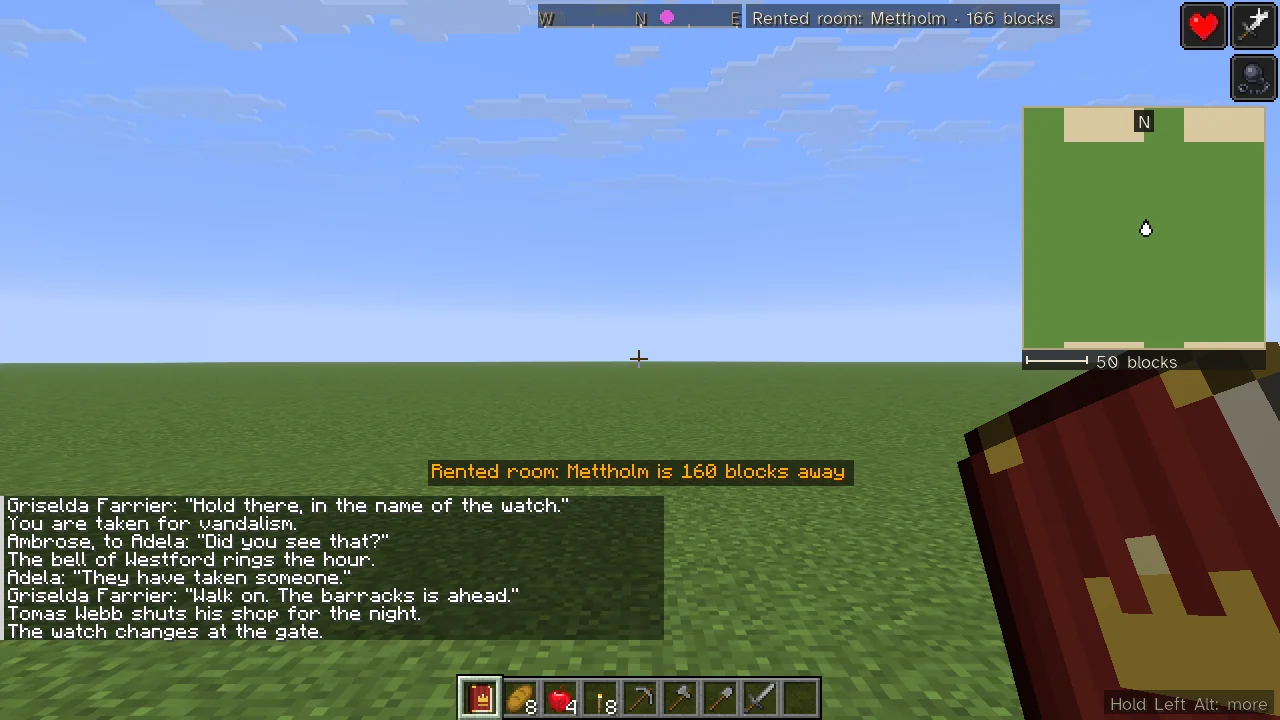
- The way. The compass strip at the top of the screen and a pin on your map lead to it ("Rented room: " and the town's name, with how far, beside the strip), and the bed glints for a minute after you book. See Maps, the Corner Map and the Compass.
A newcomer's first night
A newcomer to the world is taken to the town where they begin and given a bed for the night at its inn, on the house, until the morning after. One line of chat says so and names the room ("Your first night is free: room 1, upstairs."), the waypoint reads "Your bed:" and the town's name, and the room's door is marked as a rented room's is. If the town has no inn, or its inn nearest the heart has no bed free, there is none.
Meals and rounds
The innkeeper offers more than rooms:
- A hot meal. The heartiest fine food in the inn's stores, at the market's price. It feeds you, warms you, and gives a short spell of regeneration.
- A round for the house. A crown for each person in the inn. The drinkers warm to you (once a day each), word of it goes about as a generous deed, and the talk turns to the town's news, which you hear and which is kept in your journal. You need a tongue in common with them to follow it (see Tongues).
An inn that is someone's business
An inn can be bought as a business (see Businesses and Property). One that is someone's keeps its own takings: what you pay for a room or a hot meal goes into its stores and onto its owner's books, as does what travellers on the road pay for its beds and meals, and its innkeeper carries none of it to the treasury. It buys its larder of the town's stores each morning instead of taking the crown's food, and the townsfolk who spend the evening there pay for a drink and, if hungry, a bowl at what the town's market asks for that food, on evenings no player saw as well as those someone did.
A room in a house
A household with a bed to spare lets it. Ask its head, "Have you a room to let?" You take it for the same terms as an inn, and the rent goes straight into the householder's purse. A room costs 1 to 3 crowns a night: a fine house a crown more, a grand house two, and a town of thirty or more another crown. By the week it is five nights' price for seven.
You get the spare bed and the chest beside it, as at an inn. The head may refuse you: they will not have an enemy of the realm in a time of war, one the law is looking for (see Wanted and Bounties), or someone who does not trust you enough (see Townspeople). A house with no spare bed has nothing to let.
A whole house of the crown's
A realm's empty houses are let whole at the Town Heart ("Rent a house...") or at the house itself. You take a house for a week, two weeks or four weeks, paid ahead into the treasury. Its chests and doors are yours and no one else comes in; anyone who takes from your chests is charged with burglary. They are yours even to break, as a tenant's are: a lock does not hold you out, and what you break of the house is charged to you when the let ends, not reckoned a crime, unless someone of the town sees it done. The week's rent is at least half as much again as an inn's week, and about a hundredth of the house's price if that is more. Four weeks is a tenth cheaper.
A house can be let only while no one lives in it and no one owns it. No one of the town lives in a house while it is let whole: anyone still housed there is moved out, to be housed elsewhere in the town where a bed is free. A hut by the road where a hermit lives alone is the hermit's home, so it is never let or sold while they live there.
A house let whole runs on another week when it would end, by your standing leave, paid from your purse or, if you are away, from your other holdings; you can take the leave back on your You sheet. When you give the house up, or the let ends, it is looked over, and any damage you did is charged to you. What you leave in a house is kept for three days. A realm's steward may also end a house's let with a day's notice if the town has need of it, repaying the rent for the days left.
Let, not for sale
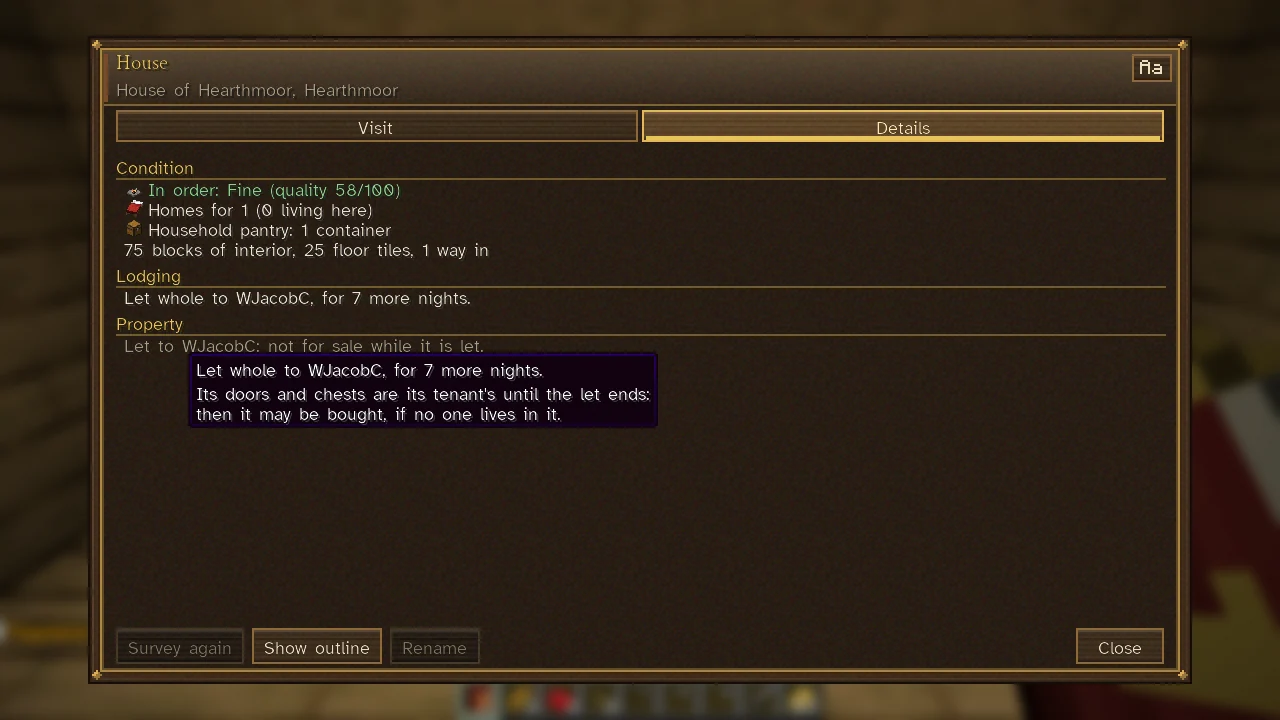
In the world's towns an empty house of the crown's carries a For sale sign over its door with its price in crowns. When the house is let, the sign comes down at once; it goes back up once the let is over, nothing of the tenant's is kept there any longer, and the house stands empty and unsold. While the let runs the house is offered to no one else. Its Details page says under Property "Let to" the tenant ": not for sale while it is let.", with how many nights are left on its hover and that its doors and chests are the tenant's until the let ends.
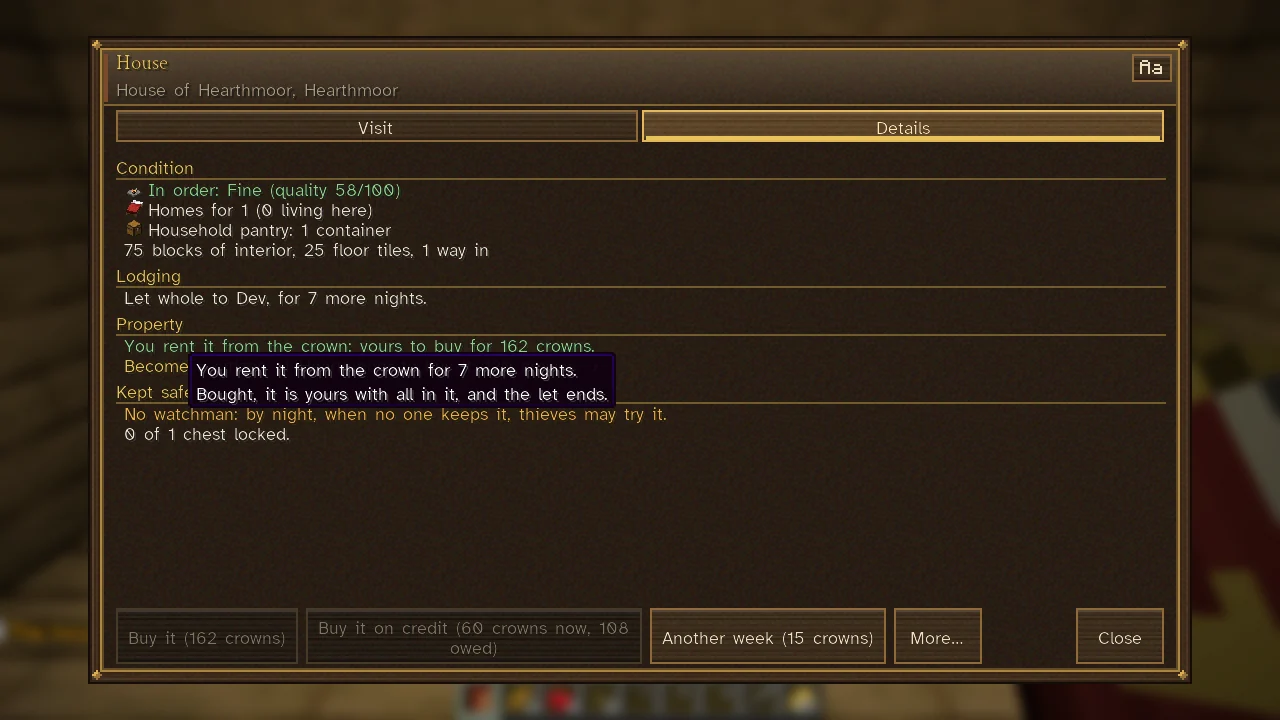
The tenant sees instead "You rent it from the crown: yours to buy for" its price, with Buy it and Buy it on credit where they may buy (see Businesses and Property). Bought, the house is theirs with all in it, and the let ends. The Property page of the tenant's You sheet lists it under Your lodging as "A house in" the town, "let by the crown".
What a let does
- It makes you one of the town's residents for as long as it runs: the town's laws count you a resident, not a stranger (see Citizenship and Ranks).
- It sets your respawn at its bed while it runs, and no longer.
- It takes your hold on a bed away from everyone else.
A let ends when its nights run out, when you give it up, if war comes between your realm and the town's, or if the household gives you notice. A household or the crown that ends a let early repays what you paid for the nights after.
Sleeping in a bed that is not yours
You may lie down in any bed. It becomes the place you wake if you fall only where it is yours to wake in: a bed in no town's building (out in the country, or at a homestead), in a house or business you own, the bed of the room you rent (any bed of a house let whole), in a house where your spouse, a parent or a child lives, or in a building of your own realm's that is no one's home, inn, alehouse, cookshop, sickroom or cell, such as its barracks or palace.
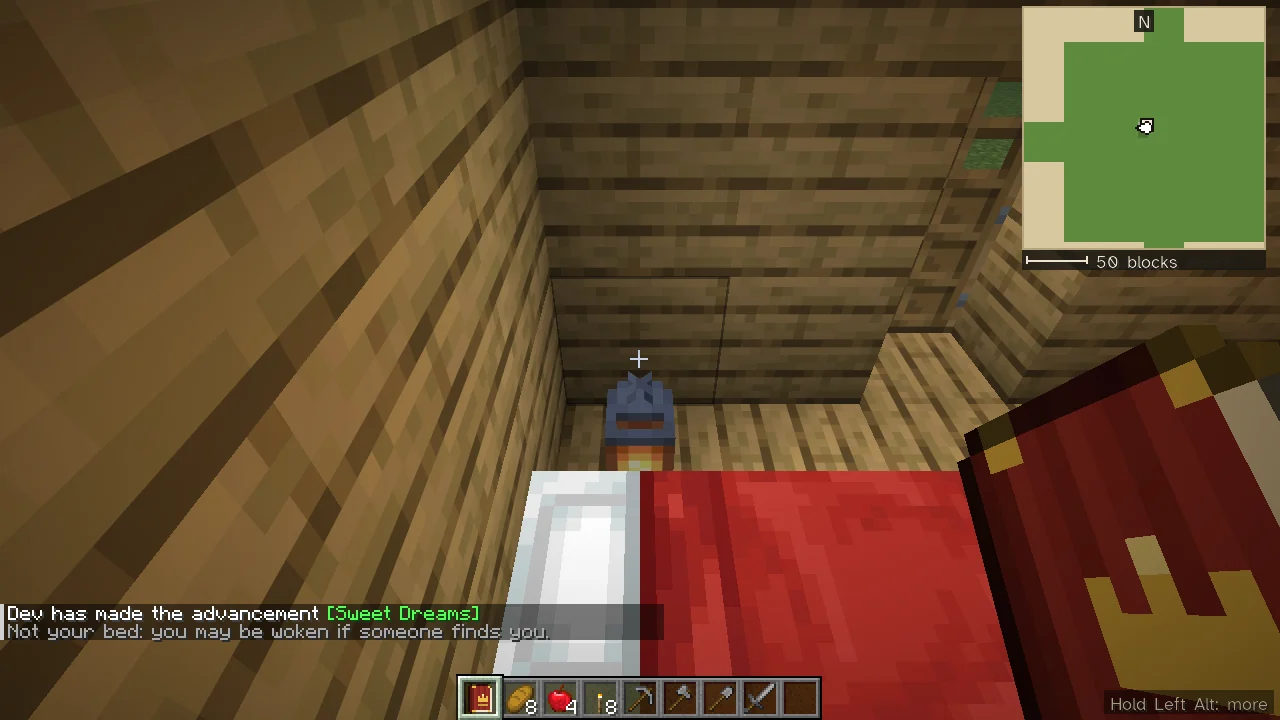
Anywhere else, sleeping there never moves you and never sets your respawn point: you wake beside the bed in the morning, and the place you return to if you fall stays where it was. Once you are asleep you are told so, once: "Not your bed: you may be woken if someone finds you." Its hover says what that means: "You wake where you lay. Your respawn point stays where it was."
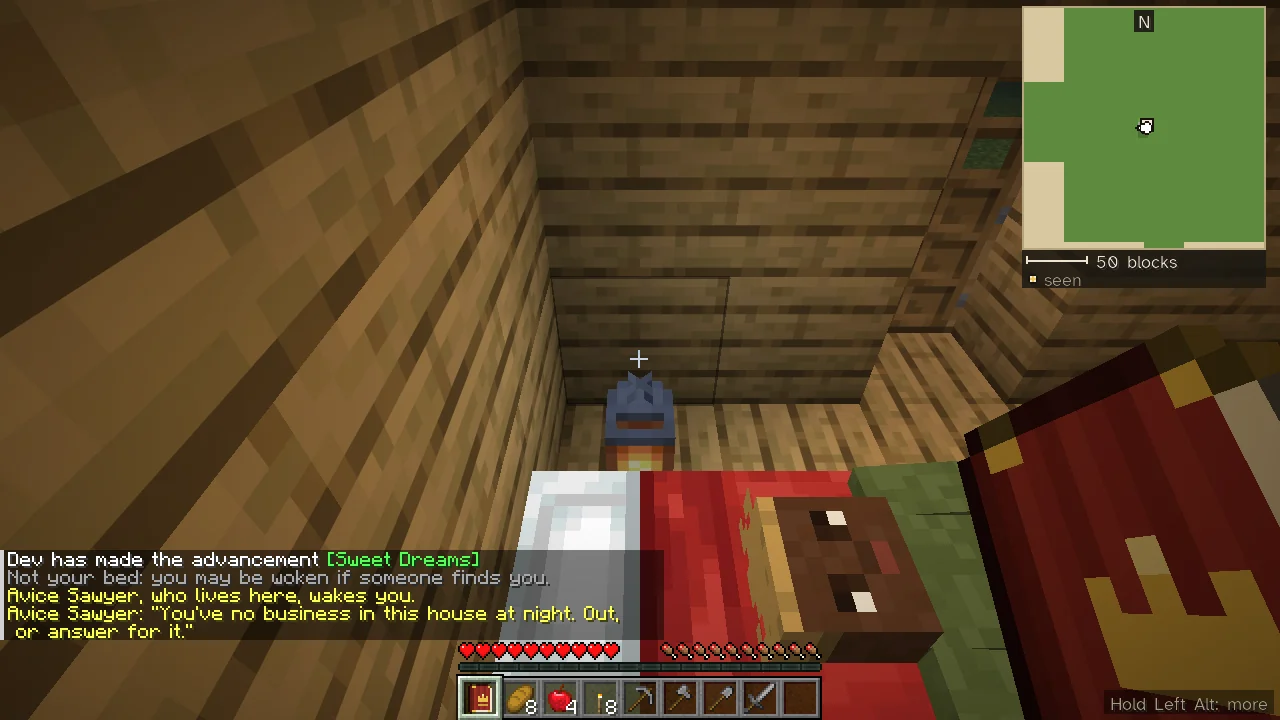
If one of the town's realm sees you asleep there, someone who lives in the house first, you are woken where you lay, your night's sleep is broken and the night does not pass. You are told who woke you: "Name, who lives here, wakes you.", or "Name finds you asleep and wakes you." The town's laws take it from there as for anyone found in a house at night: a stranger is told to leave ("You've no business in this house at night. Out, or answer for it.") and is charged with trespass only if they stay (see The Watch and Watchtowers and Crime and Punishment).
An inn's bed is the inn's own matter. Lie down in one without a room booked there and you are asked the lodging fee for the night ("Resting here has not paid for a room. Book one to keep its bed and chest."), with [Arrange lodging] to open its rooms and prices; sleep there and you owe the inn the night's fee, payable at its counter. A guest with a room who lies down in another guest's bed is told which room is theirs (above).
For rulers
The crown's rent on its own houses is a source of coin to the treasury (see Treasury and Taxes). A realm may also order a wayside inn built beside a long road: the Command Table's Sites tab, under Roads, offers one on any road of 400 blocks or more (see Roads). Travellers who stop near it sleep in its beds instead of camping, and each pays a crown to its town, or to the inn's own till where it is someone's business.