Towns
DiscussFrom the Sovereign Realms Encyclopedia
A town (the game's word for any settlement) is a place that belongs to a realm: a Town Heart at its centre, the buildings raised about it, the fields and woods its people work, and the people who live there. Everything a realm does happens in its towns: its people eat from their granaries, its builders build, its soldiers watch their walls, its treasury is kept in a treasury building (Treasury and Taxes). A realm may have one town, as a player's usually begins, or many; the great realms of the world have dozens.
Hamlets, villages, towns and cities
How a town is called depends on how many people live in it:
| People living there | Called |
|---|---|
| Fewer than 8 | A hamlet |
| 8 to 19 | A village |
| 20 to 49 | A town |
| 50 or more | A city |
The town's sheet says so under its name ("a village of the realm of Fairholm") and on its card. A town's size also changes what the world does with it: the Adventurers' Guild keeps a chapter in each realm's seat and in every town of forty or more; a realm's building code allows higher buildings in a larger town (Land, Estates and Landlords); and the world's realms sell bread for coin once a town has a dozen grown people and a bakery or a market (Food, Granaries and Hunger).
A big town may also have hamlets out by its fields: small clusters of houses about a green, named on the town's sheet.
How a town stands
- The heart. Town Hearts must stand at least 128 blocks apart. A town's precinct reaches 96 blocks from its heart; a ruler may see the town from above while standing within it (The City View). If the heart is broken the town holds no ground until it is raised again (Influence).
- Buildings. The buildings of a town declare its trades and its homes. Each valid building extends the realm's influence (Buildings, List of Building Types); buildings must stand within 192 blocks of a heart.
- People. The people of a town live in its houses, work at its buildings and eat from its stores (Townspeople).
- The seat. A realm's first town is its seat, where its ruler holds court; each town has a mayor who speaks for it (Government and Law-making).
- Walls. A town may be walled, wholly or in part (Walls and Fortifications). Your map and the corner map draw a known town's walls as a dark line and its gates as pale gaps with a pin named Gate, at the streets' and a district's scales (Maps, the Corner Map and the Compass).
The town's sheet
Use a Town Heart to open the town's sheet. It opens on the town at a glance:
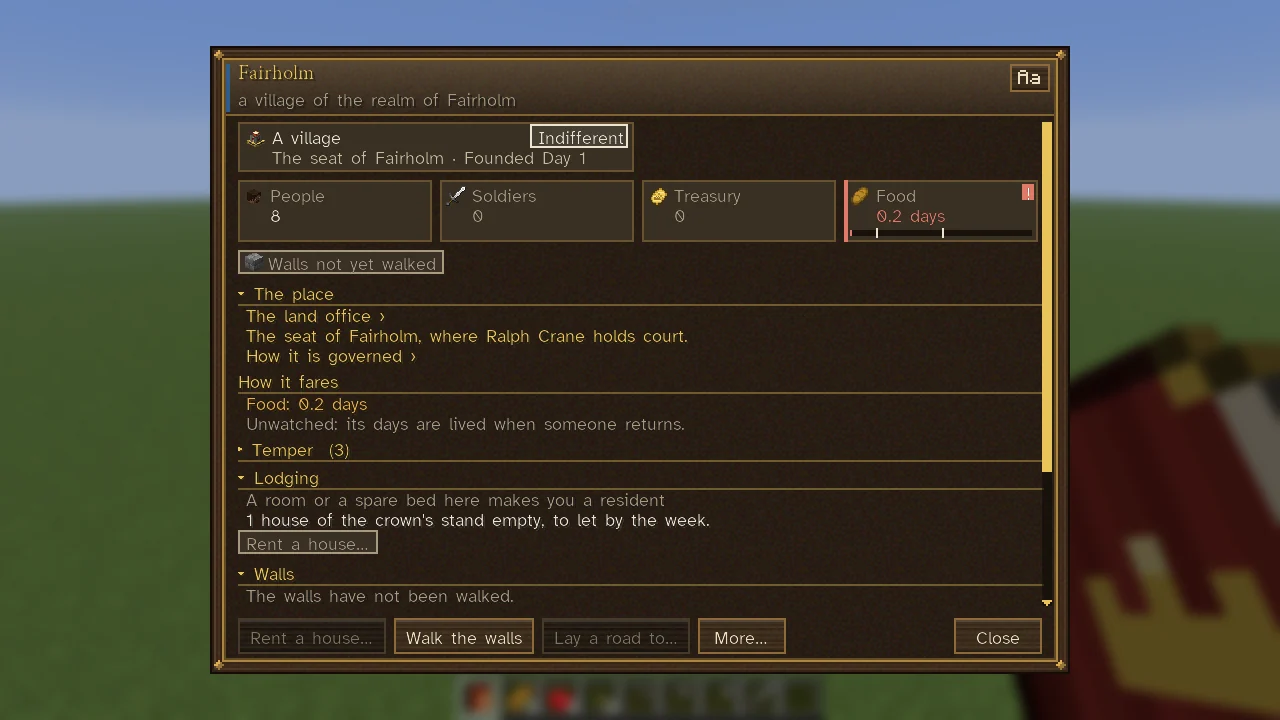
- A card: how big it is ("A village"), whose it is ("The seat of Fairholm", or "Of" its realm) and when it was founded. A chip on it says, to the town's own people, its temper toward the crown; to someone of another realm, where your two realms stand. Hover the card for how many buildings it has; click it for how the town is governed.
- Tiles: its People, with how many more or fewer than the morning before; its Soldiers; its Treasury, to those it would tell (its own people, a realm it trades with or is allied to); and its Food, in days of what its people eat, on a meter marked at 2 and 7 days.
- Chips: its walls as walked ("Enclosed, with one gate", "Open to the north", "Walls not yet walked"), its Great Buildings, and whichever of a market, smithy, gunsmith and inn it has.
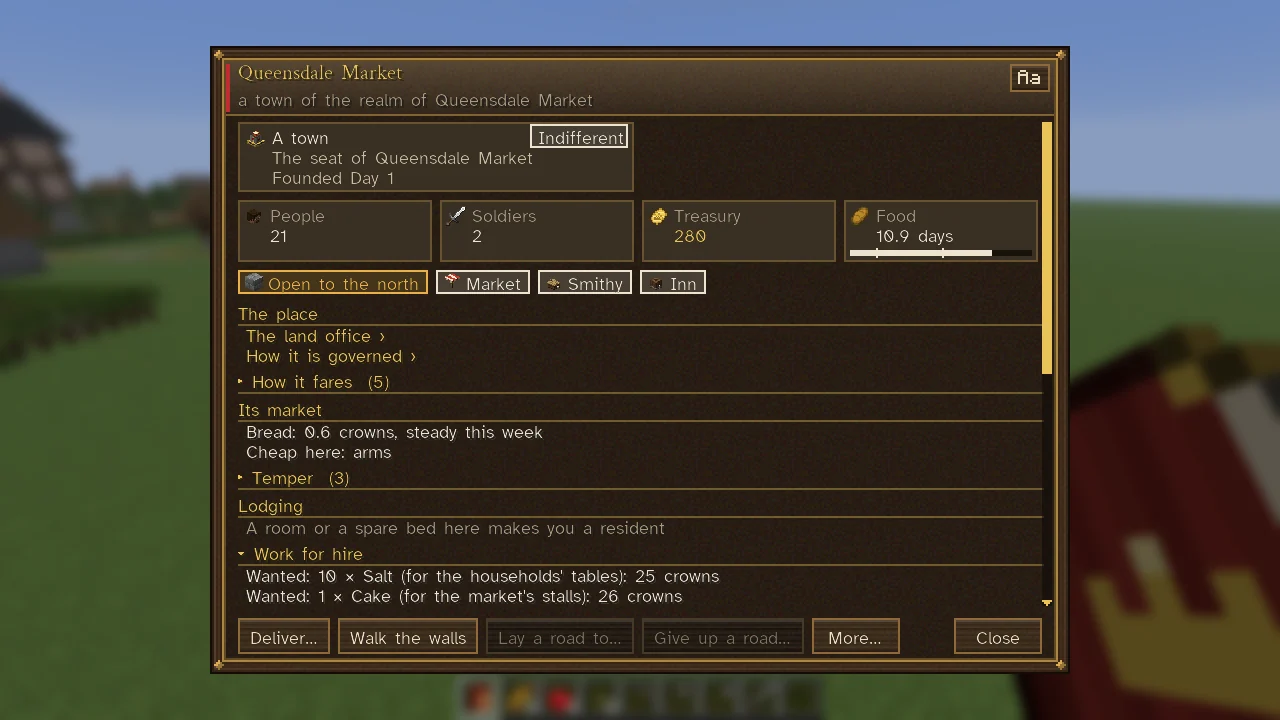
Below come its sections, in order:
- The place: its hamlets, the land office (plots for sale), the seat and who holds court, the mayor, and How it is governed; where it has a camp-ball club or a green, Camp-ball: its side and the league › (see Camp-ball).
- Relations: up to six of the realms its realm deals with as chips (war first, then truces, the hostile, allies and trading partners), each with where they stand and opening that realm's page, or "At peace with every realm it knows, and no treaties."; then Relations with every realm ›, the Relations tab of how its realm is governed (see Diplomacy and Envoys). A stranger is then shown Becoming a citizen, and a citizen of a realm of the world their own station.
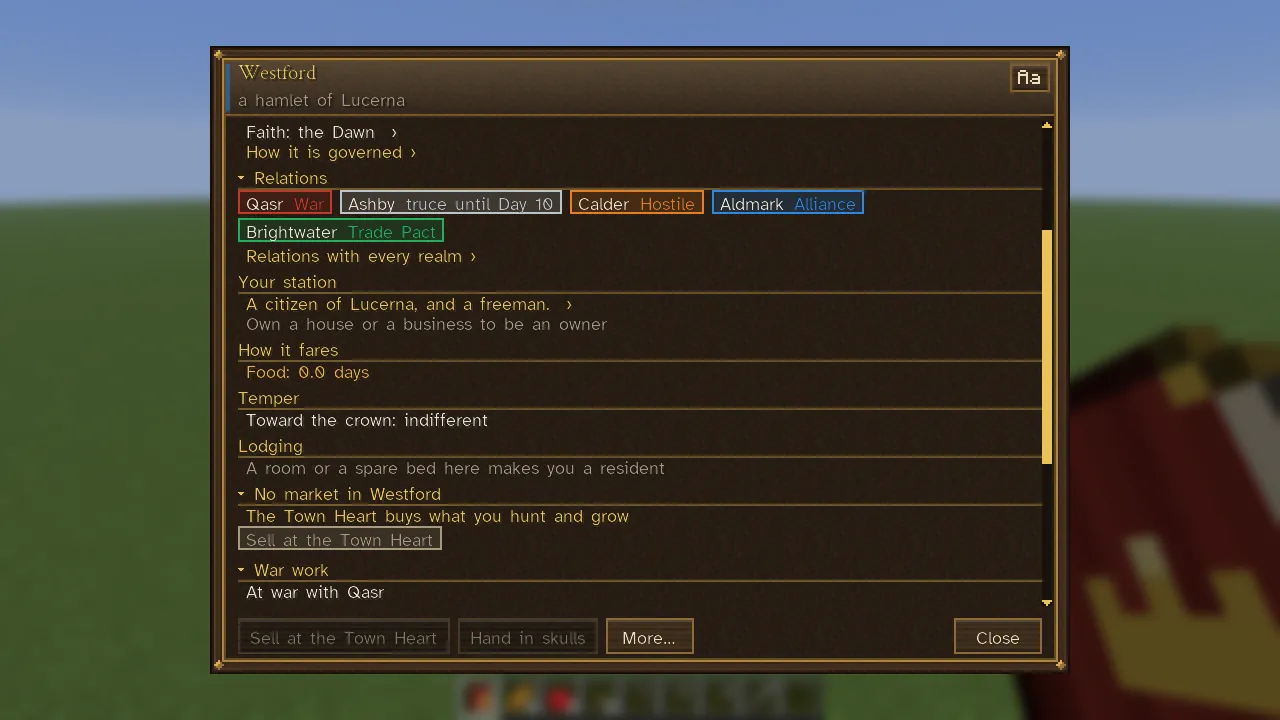
- How it fares (to members): its food in days, idle hands, bread, wages and the treasury. A town nobody is near is marked unwatched: "Unwatched: its figures are as of Day 6", its hover saying why they are that old, or "Unwatched: its days are lived when someone returns" while none of its days are kept (Catch-up Simulation). You never wait to go into such a town: its people come out as you arrive, and the days it still owes are lived behind them. Then its troubles, and its market: the price of bread, and what sells dear or cheap there.
- Temper (to members too): the people's regard for the crown and what they resent and thank it for.
- Lodging, the work it wants done, its coach office, and its Walls and Roads.
What can be done stands as chips under the section it belongs to, as well as on the bar: Become a citizen under what it costs, Walk the walls and Repair the walls under the walls, Lay a road to… and Give up a road... under the roads (Roads). A ruler's orders for the whole town stand under Orders: "See it from above (the city view)", "Send people to...", "Send settlers..." and "Rename". The town of a realm that is not your own shows less: what is believed of it, how it regards you, and whether you are wanted there.
Each town also posts a paper on the board at its heart, read with /news: its figures, the realm's affairs, prices, the law and the talk of the town (see Talking with People).
What makes a town grow
A town grows by the people it keeps and the people who come:
- Beds and bread. People want a bed, food and company. Hungry, homeless or lonely people grow unhappy, and people miserable for days pack up and leave, household and all (Townspeople, Food, Granaries and Hunger). A town needs houses with beds, granaries or pantries with food, and work. It grows by children and by newcomers only as far as its land and trade feed more than it eats, the more slowly as that margin narrows (see Food, Granaries and Hunger); the hover of the People tile on its sheet says how many its fields and trade feed ("Its fields and trade feed about 120.", or "…: it will not grow until they feed more."). Its idle with no work to be had go to seek work in towns that have it (Work and Professions).
- Children. Content couples with room at home have children, who grow up and come of age at sixteen (Courtship and Marriage).
- Settlers. At a Town Heart, under "Call settlers", a ruler can call a household from a nearby town. They come for nothing where the ruler's name carries (a following of 25 or more) or for a signing bonus paid in crowns; they walk over on foot, one household at a time. After the first, a town takes more only with beds for them and about ten loaves' worth of food each (Founding a Realm, Renown and Following).
- Moving people. A steward can send a household to another town of the realm, or send settlers (up to eight, with a pack donkey of seed, tools, timber, stone and food and a quarter of the treasury) to found a new town on open land within 1,000 blocks; that asks twice.
- Good rule. Wages paid, bread, fair laws and a garrison keep a town loyal. A town whose people mostly hate the crown, and whose garrison is thin, can rise against the realm (Factions and Demands).
- Great Buildings. An Aqueduct lets a town grow the larger and keeps fever down (Great Works).
Towns of the world
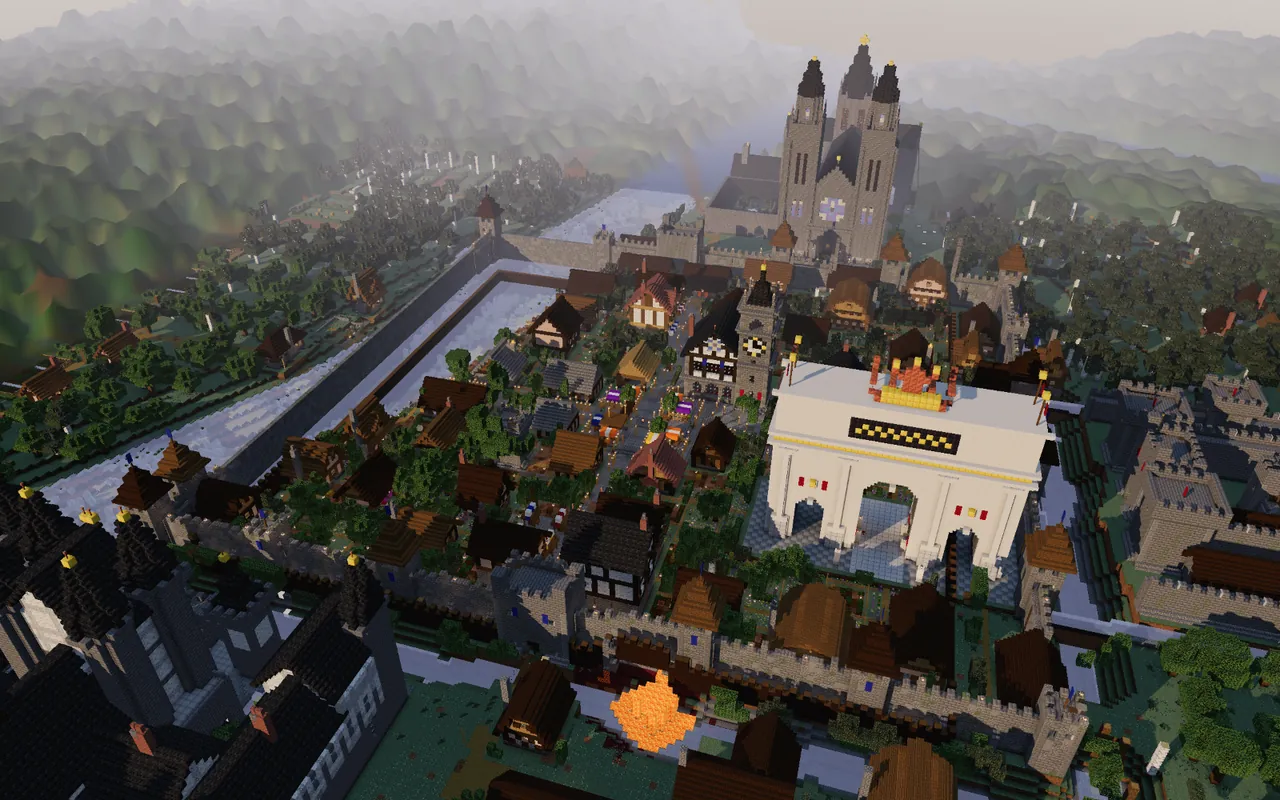
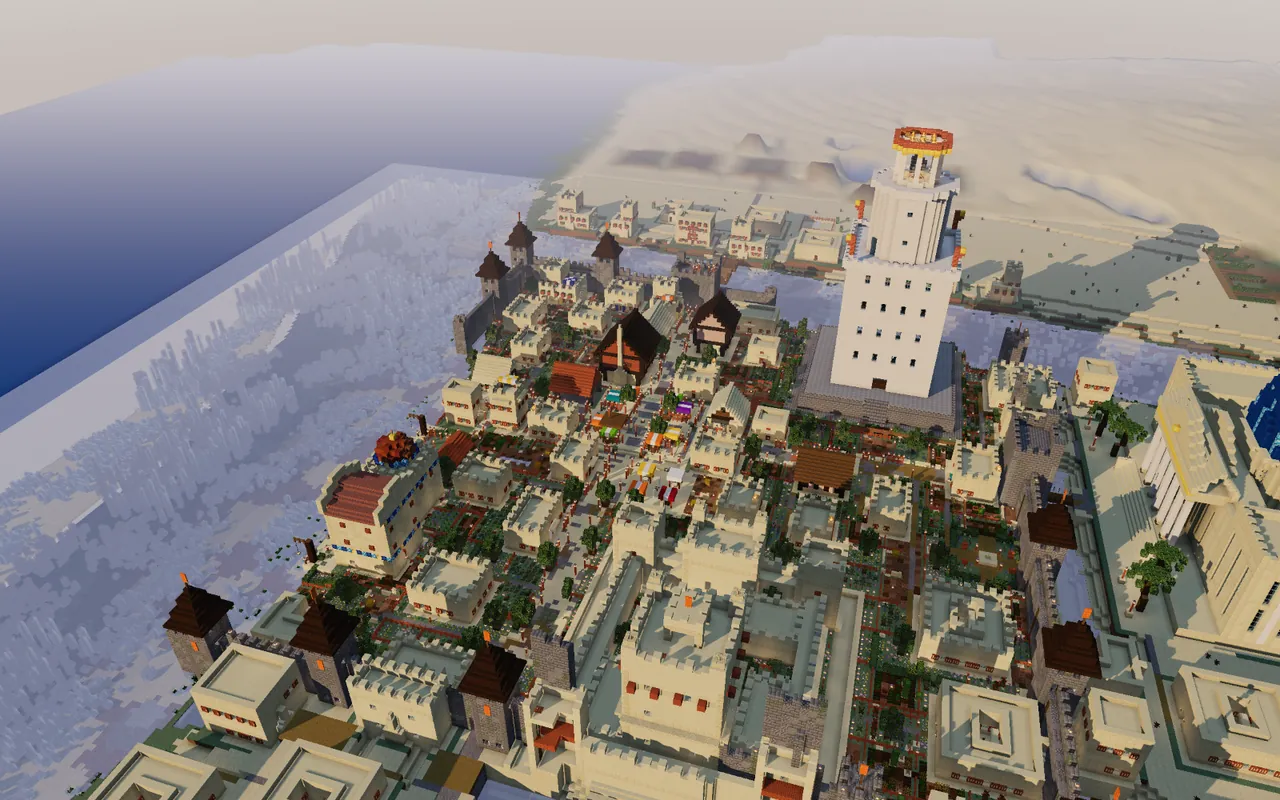
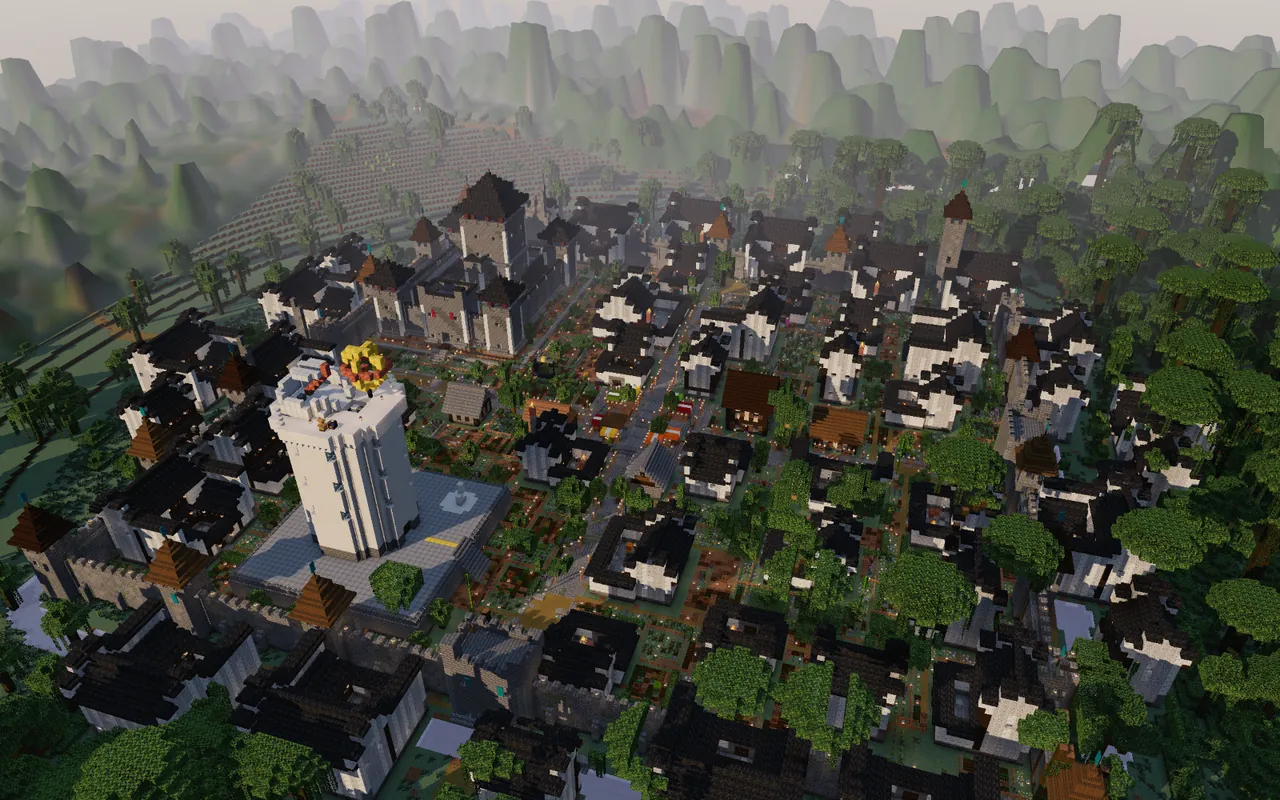
The world's realms found and grow their own towns. The world that hosted servers begin in, raised for release 0.3.8-greater.18, holds 196 towns in 74 realms, 107 of them hand-made places, and each of the five peoples builds in its own way (The Five Peoples). Fairholm is where players begin (Fairholm), and the great towns of the world are described under Notable Towns and Regions of the World.
A town of the world's realms, like a player's town whose building is handed over, lays out what it wants next itself: a house when its beds run short, fields when its food does, another lumber camp when its timber does. Its fields are sized to its bread: as many food works going up at once as it would take fields, at its own fields' yield, to grow what it eats beyond what its land and trade bring in, and never fewer than one for every 250 of its people (Food, Granaries and Hunger). The wood its building sites wait on counts as timber it is short of (Construction).
See also
- Realms, Founding a Realm
- Outposts: claiming land beyond a town.
- Roads and Minecart Lines: how towns are joined.
- The City View: seeing and shaping a town from above.